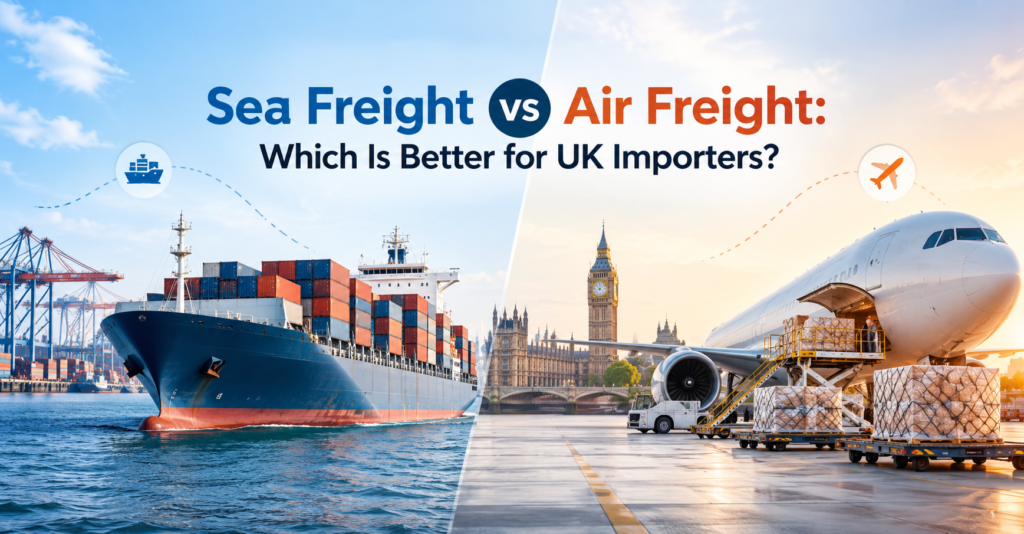
Sea Freight vs Air Freight: Which Is Better for UK Importers?
Choosing the right shipping method is an important decision for any business importing goods into the United Kingdom. Transportation costs, delivery deadlines, shipment size, and customs requirements can all affect the profitability of an import order. For this reason, understanding Sea Freight vs Air Freight can help UK importers make smarter shipping decisions. Both shipping methods offer advantages, but the best option depends on your business requirements. Sea freight is generally suitable for large, heavy, and less time-sensitive shipments, while air freight is often preferred for urgent deliveries, high-value products, and time-sensitive inventory. For example, a UK retailer importing furniture in bulk may benefit from sea freight because of its cargo capacity and cost advantages. However, an electronics supplier needing to replenish popular products quickly may prefer air freight to reduce delivery time. In this guide, we will explain the differences between sea freight and air freight, compare shipping costs and transit times, and explore how UK importers can choose the most suitable freight solution for their business. What Is Sea Freight? Sea freight is a transportation method that moves goods between countries using cargo ships. It is widely used in international trade because ships can carry large quantities of goods, including heavy machinery, furniture, textiles, industrial equipment, and retail inventory. For UK importers, sea freight shipping is particularly useful when transporting large consignments from international manufacturing and distribution centres. Businesses can choose between full container load (FCL) and less than container load (LCL) shipping, depending on the volume of their cargo. How Does Sea Freight Work? The sea freight process involves several stages, from collecting goods at the supplier’s location to delivering them to the final destination in the UK. A typical sea freight shipment follows these steps: Booking the shipment: The importer provides details about the goods, dimensions, weight, origin, and destination. Cargo collection: The goods are collected from the supplier or delivered to the relevant freight facility. Export documentation: Required shipping documents are prepared, and export formalities are completed. Container loading: The goods are loaded into a dedicated container or consolidated with other shipments. Ocean transportation: The cargo travels by sea to the destination port. UK customs clearance: Import declarations and applicable customs procedures are completed. Final delivery: Once the cargo is released, it is transported to the importer’s warehouse, distribution centre, or business premises. The actual process depends on the origin country, shipping route, cargo type, and agreed service. Types of Sea Freight Services for UK Importers Two common options are FCL and LCL shipping. Full Container Load (FCL) FCL shipping means a shipment uses a dedicated container for one customer’s cargo. It is often suitable for businesses importing large quantities of goods or requiring greater control over how their cargo is packed and handled. FCL can be a practical option for: Large furniture shipments Industrial machinery and equipment Bulk retail inventory Manufacturing materials Large ecommerce stock orders Less Than Container Load (LCL) LCL shipping allows businesses to share container space with shipments belonging to other customers. Instead of paying for an entire container, the importer pays for the space or volume used, subject to the provider’s pricing structure. LCL can suit: Small and medium-sized businesses Smaller commercial orders Product samples and stock replenishment Importers who do not need a full container However, LCL shipments may require additional consolidation and deconsolidation handling, which can affect the total cost and delivery time. Advantages of Sea Freight Shipping Sea freight offers several benefits for UK importers. 1. Lower transportation costs for many large shipments Sea freight is generally more economical than air freight for large or heavy consignments when comparing the overall transportation cost on a suitable route. This makes it attractive to wholesalers, retailers, manufacturers, and distributors that regularly import goods in bulk. 2. High cargo capacity Cargo ships can transport large volumes of commercial products in containers. This makes sea freight suitable for businesses moving substantial quantities of stock in a single shipment. 3. Flexible shipment sizes With FCL and LCL options, businesses can choose a solution based on their cargo volume and purchasing requirements. 4. Suitable for heavy and bulky goods Products such as furniture, construction materials, machinery, and industrial equipment can often be transported efficiently by sea. 5. Supports international supply chains Sea freight connects major international ports and supports the movement of goods between manufacturing centres and UK distribution networks. Disadvantages of Sea Freight Shipping Despite its benefits, sea freight has some limitations. Longer transit times: Ocean transportation generally takes longer than air freight. Potential port delays: Congestion, vessel schedules, weather, and operational disruption can affect arrival times. Additional handling: Loading, unloading, and container transfers can add time and cost. Planning requirements: Importers need to forecast stock requirements and order goods well before they are needed. Additional charges: Port handling, storage, documentation, customs clearance, and inland delivery may increase the final shipping cost. Sea freight is therefore most effective when businesses can plan ahead and do not require immediate delivery. What Is Air Freight? Air freight is a transportation method that moves cargo between countries using aircraft. It is commonly used for urgent shipments, high-value products, lightweight commercial goods, and inventory that needs to reach its destination quickly. For UK importers, air freight can be particularly useful when a delayed shipment could lead to lost sales, production interruptions, or missed customer deadlines. Although air freight typically costs more than sea freight, its speed can make it commercially worthwhile in certain situations. How Does Air Freight Work? Air freight involves several stages designed to move cargo through airport facilities and international transport networks. The process generally includes: Shipment booking: The importer or supplier provides cargo details and delivery requirements. Cargo preparation: Goods are packed, labelled, and prepared according to applicable shipping and safety requirements. Collection and transport: The cargo is moved to the departure airport or designated cargo facility. Security checks and documentation: The shipment undergoes applicable screening and documentation procedures. Air transportation: The goods are transported to the destination airport, sometimes through
Sea Freight vs Air Freight: Which Is Better for UK Importers? Read More »