nilesh

Courier vs Freight Forwarder

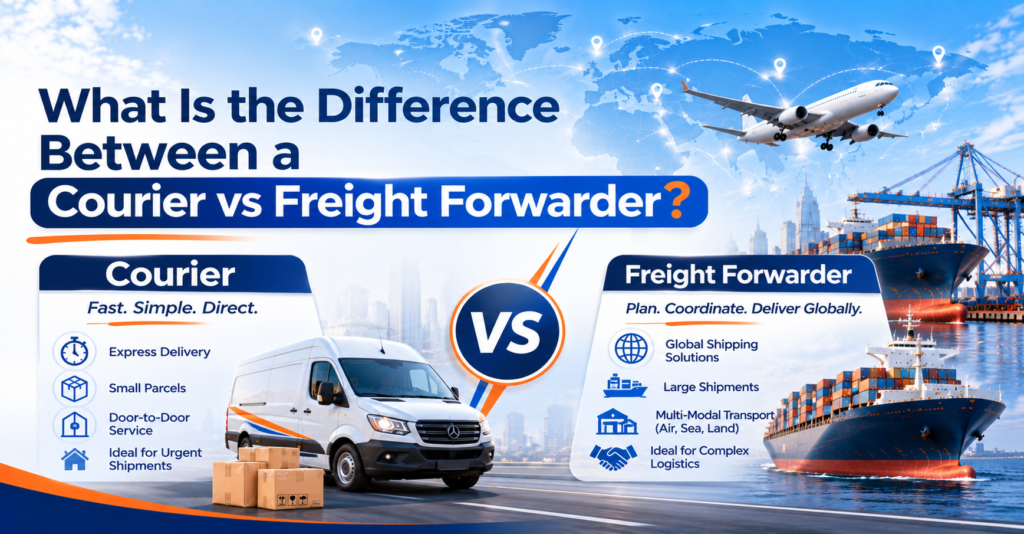
What Is the Difference Between a Courier vs Freight Forwarder?

Choosing the wrong shipping partner can increase costs, delay deliveries and create unnecessary complications for your business. When sending goods locally or internationally, businesses often come across two options: courier companies and freight forwarders. Both help move shipments from one location to another, but they serve different purposes. Understanding courier vs freight forwarder is important because the right choice depends on what you are shipping, how much you are sending, where it needs to go and how quickly it must arrive. A courier service is generally suitable for parcels, documents and smaller shipments that need convenient delivery. A freight forwarder, on the other hand, helps businesses organise the transportation of larger or more complex shipments through different transport networks. What Is a Courier Service? A courier service is a delivery solution that transports documents, parcels and packages from a sender to a recipient. Courier companies generally manage parcel collection, transportation, tracking and final delivery. Depending on the provider, they may offer domestic, international, standard and express delivery options. Businesses commonly use courier shipping services for: Important business documents. Small product samples. E-commerce orders. Customer parcels. Urgent replacement parts. Small packages requiring international delivery. For example, an online retailer sending a customer’s order from a warehouse to a residential address may use a courier company. The courier collects the package, moves it through its delivery network and delivers it to the customer. Courier services are particularly useful when convenience, parcel tracking and straightforward delivery arrangements are priorities. What Is a Freight Forwarder? A freight forwarder is a company that arranges the transportation of goods from one location to another on behalf of businesses. Unlike a typical parcel courier, a freight forwarder coordinates different stages of the shipping process. This may include selecting transportation methods, arranging cargo movement, coordinating carriers, preparing shipping documentation and supporting customs clearance. Freight forwarding services are commonly used for: Commercial cargo shipments. Bulk goods and raw materials. Heavy machinery and equipment. Palletised products. International imports and exports. Large-volume business consignments. For example, a UK importer purchasing several pallets of products from an overseas manufacturer may work with a freight forwarder. The forwarder can coordinate the movement of goods by air, sea or road, depending on the shipment requirements. Freight forwarders help businesses manage complex shipping arrangements without having to coordinate every transportation stage independently. Courier vs Freight Forwarder: What Is the Main Difference? The main difference between a courier and a freight forwarder is the type and complexity of shipment they handle. A courier company generally focuses on collecting and delivering individual parcels or documents through an established delivery network. A freight forwarder arranges transportation for cargo shipments and may coordinate several carriers, transport methods and logistics activities. Here is a quick comparison: Comparison Factor Courier Service Freight Forwarder Main Purpose Parcel and document delivery Arranging cargo transportation Shipment Type Documents, parcels and small packages Bulk goods, pallets and commercial cargo Shipment Size Usually smaller shipments Often larger or heavier shipments Transportation Uses established courier networks Coordinates air, sea, road or multimodal transport Delivery Speed Often offers standard and express options Depends on transport method and route Pricing Often based on parcel weight, dimensions and destination Depends on cargo, route, transport method and services Tracking Parcel-level tracking is commonly available Cargo tracking and shipment updates depend on the provider Customs Support May be included or coordinated for international parcels Often helps arrange customs-related processes and documentation Best For Documents, samples and customer orders Imports, exports and larger commercial shipments The exact services and responsibilities vary between providers. Some logistics companies offer both courier and freight forwarding solutions. Why Understanding Courier vs Freight Forwarder Matters for Businesses Selecting the right shipping arrangement can influence delivery schedules, transportation expenses and overall supply chain efficiency. Businesses that understand the difference can make better decisions based on their actual shipping requirements. 1. Helps Control Shipping Costs Shipping costs vary depending on parcel size, cargo weight, transportation method, destination and additional services. Using a freight forwarding arrangement for a small document may be unnecessary, while sending large commercial cargo through individual parcel services may not be economical. Understanding your options helps you compare suitable services and avoid paying for transportation features you do not need. For a clearer understanding of the factors involved, businesses can explore this guide to International Shipping Costs. 2. Improves Delivery Planning Different shipments have different delivery requirements. An urgent business document may need express courier delivery, whereas a large commercial shipment may be planned around an air or sea freight schedule. Choosing the right service helps businesses set more realistic delivery expectations. 3. Supports Better Inventory Management Manufacturers and retailers often depend on the timely arrival of raw materials, stock and finished products. Freight forwarding can help businesses coordinate larger cargo movements, while courier services can support smaller, urgent deliveries. Using the appropriate option helps companies manage different types of shipments more effectively. 4. Simplifies International Shipping Cross-border shipping involves more than moving goods between two locations. Businesses may need to consider customs procedures, commercial invoices, packing lists, duties, taxes and other destination-specific requirements. Freight forwarders can help coordinate several parts of the international transportation process, while courier companies may provide integrated international parcel delivery services. 5. Reduces Unnecessary Logistics Complications When businesses understand what each provider handles, they can choose a suitable shipping partner from the beginning. This makes it easier to plan collections, prepare documents, compare quotations and coordinate deliveries. When Should You Choose Courier Shipping Services? Courier shipping services are generally the better option when you need to send individual parcels, documents or smaller packages. They are particularly useful when the shipment needs a straightforward collection and delivery arrangement. Consider using a courier service in the following situations. Sending Important Business Documents Contracts, legal paperwork, invoices and other important documents may need to reach a recipient quickly. A courier service can provide a convenient delivery option, with tracking or delivery confirmation depending on the provider. Delivering E-Commerce Orders Online retailers often depend on

What Is the Difference Between a Courier vs Freight Forwarder? Read More »

Express Courier Service

How to Choose the Best Express Courier Service for Fast and Reliable Business Deliveries

What Is an Express Courier Service? An express courier service is a shipping solution designed to deliver parcels, documents and other shipments within a shorter or more predictable timeframe than standard delivery options. These services are commonly used when businesses need to move urgent shipments quickly, meet customer deadlines or avoid delays in their supply chain. Depending on the courier provider and destination, express delivery options may include: Same-day delivery in selected locations. Next-day or overnight delivery. Time-definite domestic shipments. International express deliveries. Priority handling for urgent documents and parcels. For example, a manufacturer waiting for a critical machine component may choose express delivery to reduce production downtime. Similarly, an online retailer may use a priority courier option to fulfil an urgent customer order. The exact delivery commitment depends on the service selected, collection time, destination, customs requirements and operational conditions. Why Choosing the Right Express Courier Service Matters for Businesses Delivery performance is closely connected to business performance. A shipment that arrives late can interrupt operations, affect customer satisfaction and create additional costs. Choosing a suitable express courier service helps businesses manage these challenges more effectively. 1. Helps Meet Customer Expectations Customers increasingly expect businesses to provide clear delivery timelines. When a company communicates a delivery date, customers expect the shipment to arrive within the promised period. A reliable courier partner helps businesses maintain realistic delivery commitments and improve the overall customer experience. 2. Reduces Operational Disruptions Some shipments are directly connected to daily business operations. Delayed raw materials, replacement parts or important documents can slow down work. Express delivery can help businesses move urgent items quickly and reduce the impact of unexpected shipping delays. 3. Supports Business Reputation A customer’s experience does not end when they place an order. Delivery is another important part of their interaction with a business. Consistent and dependable deliveries can strengthen customer confidence, while repeated delays may affect how customers view the company. 4. Improves Shipment Visibility Modern courier services may provide tracking facilities that allow businesses to monitor shipment progress. This visibility helps teams respond to delivery issues, update customers and plan their next steps more effectively. 5. Supports Time-Sensitive Business Activities Businesses involved in manufacturing, retail, healthcare supply chains and international trade may regularly handle urgent shipments. An appropriate express delivery option can help them manage time-sensitive requirements without relying entirely on standard shipping schedules. 8 Important Factors to Consider When Choosing an Express Courier Service Before selecting a courier partner, businesses should evaluate more than just the advertised delivery speed. The following factors can help you compare available services. 1. Check Delivery Speed and Guaranteed Timelines The first factor to consider is how quickly the courier can deliver your shipment. Different providers offer different delivery options, including next-day, overnight and international express services. However, an advertised delivery timeframe does not always mean every destination is covered by the same commitment. Before booking, check: Expected delivery date and time. Available collection schedules. Delivery coverage for your destination. Weekend and public holiday arrangements. Conditions that may affect delivery commitments. For example, a business sending an urgent contract may need a time-definite delivery option. A company shipping a replacement product may simply require next-day delivery. Choose a service that matches the actual urgency of your shipment. 2. Evaluate Delivery Reliability Fast delivery is useful only when the courier can consistently meet its commitments. A provider may advertise impressive delivery speeds, but businesses should also understand how it handles delays, failed delivery attempts and unexpected operational problems. Consider asking about: Delivery performance and service commitments. Procedures for delayed shipments. Handling of unsuccessful delivery attempts. Customer support availability. Escalation procedures for urgent consignments. Reliability is particularly important for businesses shipping high-value goods or products that customers need by a specific date. 3. Look for Real-Time Tracking Facilities Shipment tracking gives businesses better visibility throughout the delivery process. A suitable courier service should provide clear tracking updates, such as shipment collection, transit progress and delivery confirmation, depending on the service offered. Tracking can help businesses: Monitor parcels without repeatedly contacting the courier. Identify potential delivery delays. Provide customers with shipment updates. Plan receiving and inventory activities. Maintain records of completed deliveries. For example, an e-commerce business can use tracking information to answer customer questions about an order’s progress. When comparing providers, check whether tracking information is easy to access and whether proof of delivery is available. 4. Compare Pricing and Additional Charges Price is another important consideration, especially for businesses that ship frequently. However, selecting the cheapest courier without checking the service details can create problems later. Some shipments may involve additional charges depending on their dimensions, weight, destination or delivery requirements. Ask for a clear breakdown of: Base shipping rates. Volumetric or dimensional weight charges. Fuel surcharges. Remote-area delivery fees. Customs duties and taxes, where applicable. Additional handling or special-service charges. For international shipments, businesses should also understand how customs clearance and destination-specific charges are handled. If your business regularly sends goods overseas, understanding International Shipping Costs can help you plan shipping budgets more accurately. The objective is to compare the total cost of the service rather than looking at the initial quoted price alone. 5. Check Domestic and International Delivery Coverage Not every courier provider serves every destination equally well. A company may have strong coverage across major cities but limited services in remote areas or international destinations. Before choosing a provider, confirm: Whether your collection location is covered. Whether the destination is serviceable. Availability of international express delivery. Transit time estimates for your regular routes. Customs support for international shipments. Delivery arrangements in remote locations. This is particularly important for businesses that serve customers across different regions or export products to international markets. For overseas shipments, also consider whether air freight or sea freight is more suitable. The comparison in Sea Freight vs Air Freight: Which Is Better for UK Importers? can help businesses understand how different transport methods suit different shipping requirements. 6. Understand Shipment Handling and Security Not all parcels

How to Choose the Best Express Courier Service for Fast and Reliable Business Deliveries Read More »

Sea Freight vs Air Freight

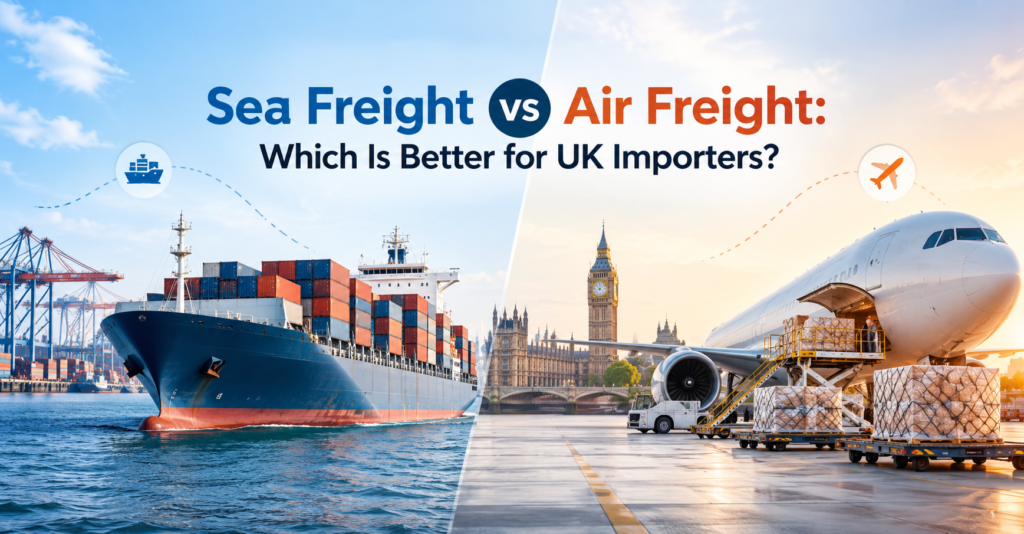
Sea Freight vs Air Freight: Which Is Better for UK Importers?

Choosing the right shipping method is an important decision for any business importing goods into the United Kingdom. Transportation costs, delivery deadlines, shipment size, and customs requirements can all affect the profitability of an import order. For this reason, understanding Sea Freight vs Air Freight can help UK importers make smarter shipping decisions. Both shipping methods offer advantages, but the best option depends on your business requirements. Sea freight is generally suitable for large, heavy, and less time-sensitive shipments, while air freight is often preferred for urgent deliveries, high-value products, and time-sensitive inventory. For example, a UK retailer importing furniture in bulk may benefit from sea freight because of its cargo capacity and cost advantages. However, an electronics supplier needing to replenish popular products quickly may prefer air freight to reduce delivery time. In this guide, we will explain the differences between sea freight and air freight, compare shipping costs and transit times, and explore how UK importers can choose the most suitable freight solution for their business. What Is Sea Freight? Sea freight is a transportation method that moves goods between countries using cargo ships. It is widely used in international trade because ships can carry large quantities of goods, including heavy machinery, furniture, textiles, industrial equipment, and retail inventory. For UK importers, sea freight shipping is particularly useful when transporting large consignments from international manufacturing and distribution centres. Businesses can choose between full container load (FCL) and less than container load (LCL) shipping, depending on the volume of their cargo. How Does Sea Freight Work? The sea freight process involves several stages, from collecting goods at the supplier’s location to delivering them to the final destination in the UK. A typical sea freight shipment follows these steps: Booking the shipment: The importer provides details about the goods, dimensions, weight, origin, and destination. Cargo collection: The goods are collected from the supplier or delivered to the relevant freight facility. Export documentation: Required shipping documents are prepared, and export formalities are completed. Container loading: The goods are loaded into a dedicated container or consolidated with other shipments. Ocean transportation: The cargo travels by sea to the destination port. UK customs clearance: Import declarations and applicable customs procedures are completed. Final delivery: Once the cargo is released, it is transported to the importer’s warehouse, distribution centre, or business premises. The actual process depends on the origin country, shipping route, cargo type, and agreed service. Types of Sea Freight Services for UK Importers Two common options are FCL and LCL shipping. Full Container Load (FCL) FCL shipping means a shipment uses a dedicated container for one customer’s cargo. It is often suitable for businesses importing large quantities of goods or requiring greater control over how their cargo is packed and handled. FCL can be a practical option for: Large furniture shipments Industrial machinery and equipment Bulk retail inventory Manufacturing materials Large ecommerce stock orders Less Than Container Load (LCL) LCL shipping allows businesses to share container space with shipments belonging to other customers. Instead of paying for an entire container, the importer pays for the space or volume used, subject to the provider’s pricing structure. LCL can suit: Small and medium-sized businesses Smaller commercial orders Product samples and stock replenishment Importers who do not need a full container However, LCL shipments may require additional consolidation and deconsolidation handling, which can affect the total cost and delivery time. Advantages of Sea Freight Shipping Sea freight offers several benefits for UK importers. 1. Lower transportation costs for many large shipments Sea freight is generally more economical than air freight for large or heavy consignments when comparing the overall transportation cost on a suitable route. This makes it attractive to wholesalers, retailers, manufacturers, and distributors that regularly import goods in bulk. 2. High cargo capacity Cargo ships can transport large volumes of commercial products in containers. This makes sea freight suitable for businesses moving substantial quantities of stock in a single shipment. 3. Flexible shipment sizes With FCL and LCL options, businesses can choose a solution based on their cargo volume and purchasing requirements. 4. Suitable for heavy and bulky goods Products such as furniture, construction materials, machinery, and industrial equipment can often be transported efficiently by sea. 5. Supports international supply chains Sea freight connects major international ports and supports the movement of goods between manufacturing centres and UK distribution networks. Disadvantages of Sea Freight Shipping Despite its benefits, sea freight has some limitations. Longer transit times: Ocean transportation generally takes longer than air freight. Potential port delays: Congestion, vessel schedules, weather, and operational disruption can affect arrival times. Additional handling: Loading, unloading, and container transfers can add time and cost. Planning requirements: Importers need to forecast stock requirements and order goods well before they are needed. Additional charges: Port handling, storage, documentation, customs clearance, and inland delivery may increase the final shipping cost. Sea freight is therefore most effective when businesses can plan ahead and do not require immediate delivery. What Is Air Freight? Air freight is a transportation method that moves cargo between countries using aircraft. It is commonly used for urgent shipments, high-value products, lightweight commercial goods, and inventory that needs to reach its destination quickly. For UK importers, air freight can be particularly useful when a delayed shipment could lead to lost sales, production interruptions, or missed customer deadlines. Although air freight typically costs more than sea freight, its speed can make it commercially worthwhile in certain situations. How Does Air Freight Work? Air freight involves several stages designed to move cargo through airport facilities and international transport networks. The process generally includes: Shipment booking: The importer or supplier provides cargo details and delivery requirements. Cargo preparation: Goods are packed, labelled, and prepared according to applicable shipping and safety requirements. Collection and transport: The cargo is moved to the departure airport or designated cargo facility. Security checks and documentation: The shipment undergoes applicable screening and documentation procedures. Air transportation: The goods are transported to the destination airport, sometimes through

Sea Freight vs Air Freight: Which Is Better for UK Importers? Read More »

international shipping costs

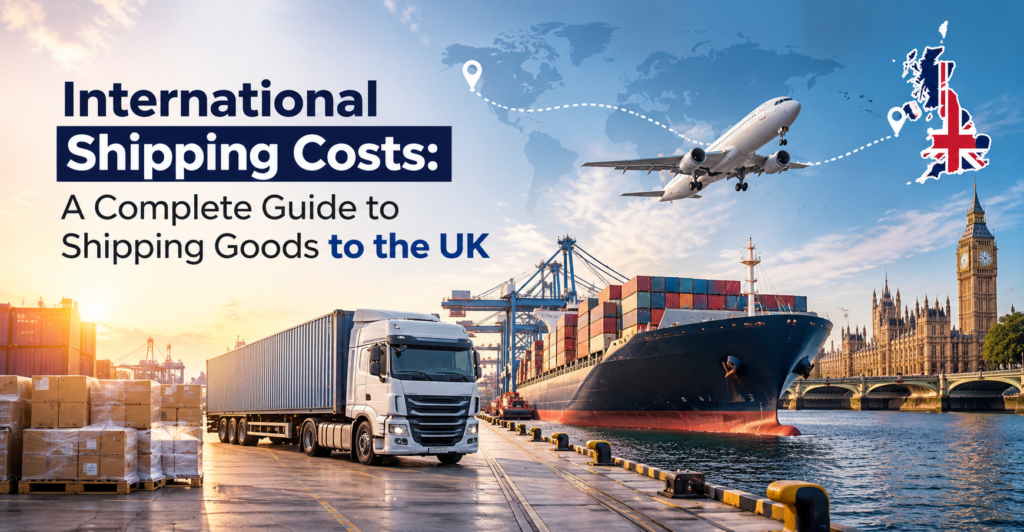
International Shipping Costs: A Complete Guide to Shipping Goods to the UK

A low shipping quote can quickly become an expensive mistake when extra charges appear later. For businesses shipping goods to the United Kingdom, understanding the full cost of transportation is essential for protecting profit margins and meeting delivery commitments. The price you receive from a carrier may cover only the main journey, while customs clearance, handling, insurance and final delivery can increase the total expense. International shipping costs vary according to the origin country, shipment size, transport method, cargo type and delivery requirements. Import taxes and customs procedures can also affect the final amount a business pays. Whether you are sending products to UK customers, supplying a retailer or moving commercial goods between countries, planning these expenses in advance helps you make better decisions. This guide explains how shipping costs to the UK are calculated, which charges to consider and how businesses can manage their freight budgets more effectively. What Are International Shipping Costs? International shipping costs are the expenses involved in moving goods from one country to another. They can include transportation, export handling, freight documentation, customs services, insurance and delivery to the final destination. The total depends on the services included in your quotation. Two providers may offer different prices for the same shipment because one quote includes additional handling or delivery services that the other excludes. Businesses should therefore compare the complete shipping cost rather than choosing a provider based only on the initial freight rate. Why Do International Shipping Costs Matter for Businesses? Shipping expenses affect more than the logistics budget. They influence product pricing, profit margins, stock availability and customer satisfaction. For example, an online retailer importing products into the UK may calculate its selling price using the supplier’s product cost and the quoted freight rate. If customs fees, storage or local delivery charges were not included, the actual cost per product could be considerably higher than expected. Accurate cost planning helps businesses: Protect profit margins: Include shipping and related expenses when calculating product costs. Plan cash flow: Prepare for freight payments, taxes and other charges before goods arrive. Set realistic delivery expectations: Choose a shipping method that matches the required timeline. Price products more accurately: Account for logistics costs when setting wholesale or retail prices. Reduce unexpected expenses: Identify possible surcharges before confirming a shipment. What Factors Affect Shipping Costs to the UK? Several factors determine the final freight quotation. Understanding them helps businesses identify where savings may be possible. 1. Shipping Method The transport method is one of the biggest factors affecting international freight costs. Air freight: Suitable for urgent, valuable or time-sensitive goods. It generally costs more per unit than sea freight. Sea freight: Often suitable for bulky or heavy commercial shipments that can accommodate longer transit times. Express courier: Useful for documents, samples and smaller parcels that need quick delivery. Road or rail freight: May be suitable for particular European or intermodal routes, depending on the origin, destination and available services. The cheapest option is not always the most economical overall. Delayed stock can affect sales, while urgent air freight may be unnecessary for products that can be shipped well in advance. 2. Shipment Weight and Dimensions Carriers assess shipment weight and size when calculating freight charges. Depending on the service, they may use actual weight or dimensional weight, which reflects the space a parcel occupies. For example, a large box containing lightweight goods may cost more to transport than a compact box with the same actual weight. Businesses can control this expense by using appropriately sized cartons, avoiding unnecessary empty space and confirming packing requirements before booking. 3. Origin and Destination The shipping route affects freight rates. Costs can change depending on the distance to the departure port or airport, available transport capacity, destination handling and the final delivery postcode. A shipment travelling to a major UK distribution hub may have different inland delivery expenses from one going to a remote location. Businesses should request pricing for the complete route rather than only the international journey. 4. Cargo Type and Special Handling Standard commercial goods are usually easier to price than cargo requiring special arrangements. Fragile items, oversized machinery, temperature-sensitive products and certain regulated goods may require additional packaging, documentation, equipment or handling. These requirements can increase the total cost. Provide accurate cargo details when requesting a quotation so that the provider can identify relevant charges before collection. 5. Seasonal Demand and Fuel Charges Freight rates can change with fuel prices, available capacity, port congestion, peak-season demand and wider disruptions to shipping routes. A quotation received several weeks before dispatch may not remain valid indefinitely. Confirm the quote’s validity period and ask which charges could change before the goods leave. How to Calculate International Shipping Costs A useful shipping budget should include the main freight charge and any additional expenses required to get the goods to their destination. Depending on the shipment, the calculation may include: Supplier collection and origin handling International freight Export documentation and clearance Cargo insurance Destination handling and terminal charges Customs agent or clearance fees Import duty and import VAT, where applicable Storage, inspection or special handling charges Final delivery within the UK An Illustrative Shipping Cost Example Imagine a business imports commercial goods into the UK. Its initial freight quotation is £800, but the shipment also requires £150 in handling, £100 for customs services and £200 for final delivery. The estimated logistics expenses would be: Cost item Illustrative amount International freight £800 Handling charges £150 Customs service fee £100 Final delivery £200 Total listed logistics costs £1,250 These figures are examples for explaining the calculation, not current market rates or a real quotation. Import duty, import VAT, insurance and other applicable charges have not been included in this example. The lesson is simple: ask for an itemised quotation and confirm what is excluded before calculating your total landed cost. Understanding UK Customs Charges and Import Taxes Freight charges and customs charges are different. Freight pays for transportation and related services, while import duty and

International Shipping Costs: A Complete Guide to Shipping Goods to the UK Read More »

Import and export documentation

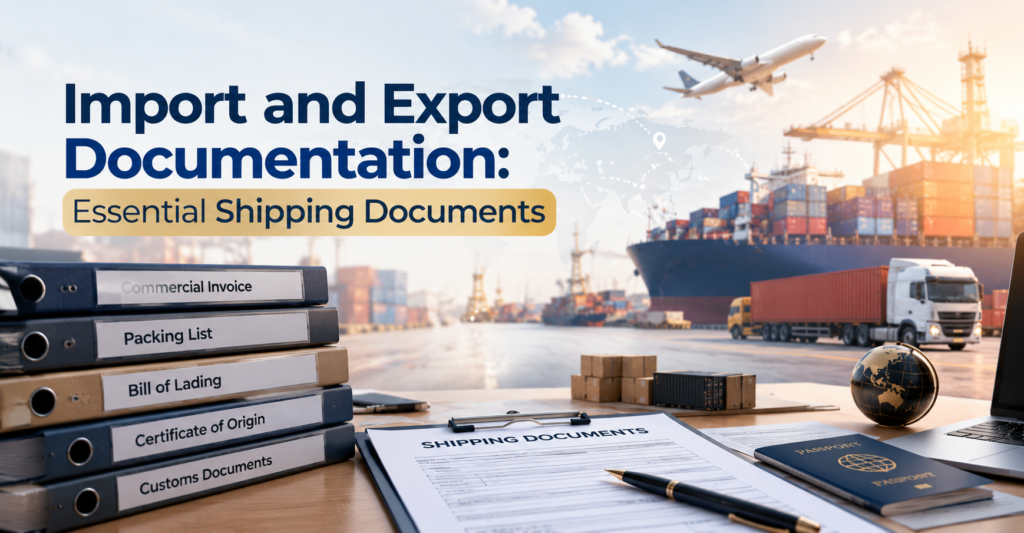
Import and Export Documentation | Complete Guide 

One missing shipping document can delay an entire international shipment. For businesses involved in global trade, import and export documentation is an essential part of moving goods across borders. Even when products are packed and ready to ship, incorrect invoices, incomplete customs declarations or missing certificates can create delays, unexpected costs and extra administrative work. International shipping involves more than arranging transportation. Businesses must provide accurate information about their products, shipment value, origin, destination and intended use. Depending on the goods and route, they may also need licences, permits or proof of origin. Whether you are exporting products to overseas customers or importing stock into the UK, preparing the right paperwork helps keep shipments organised and supports customs compliance. This guide explains the essential international shipping documents, why they matter, common documentation mistakes and practical ways to prepare your paperwork more efficiently. What Is Import and Export Documentation? Import and export documentation refers to the paperwork and electronic records used to identify goods, confirm commercial transactions, arrange transportation and complete customs procedures when products move between countries. These documents help customs authorities assess shipments and determine whether goods meet the applicable import or export requirements. They also help freight forwarders, carriers, suppliers and buyers coordinate their responsibilities. The documents required depend on the product, the countries involved, the transport method and any applicable trade restrictions. Some documents are commonly used for commercial shipments, while others are needed only for particular goods or circumstances. Why Is Import and Export Documentation Important? Accurate documentation helps businesses move goods through international supply chains with fewer avoidable problems. 1. Supports Customs Clearance Customs authorities use shipment information to assess declarations, identify products and determine whether duties, taxes or regulatory requirements apply. Missing or inconsistent information can lead to questions, delays or additional checks. 2. Helps Prevent Unexpected Costs Missing details or errors in shipping documents can lead to extra costs, such as warehouse storage, additional handling and document correction fees. Preparing documents before dispatch gives businesses more time to identify mistakes and correct them. To see how these fees fit into your overall budget, read our guide to international shipping costs for goods shipped to the UK. 3. Improves Communication Between Trading Partners Suppliers, buyers, freight forwarders and customs agents often rely on the same shipment information. Consistent product descriptions, quantities and values help everyone work from the same details. 4. Creates Better Business Records Invoices, transport documents and customs records help businesses track shipments, reconcile payments and maintain evidence for accounting or compliance purposes. For example, a UK retailer importing 500 units of a product should ensure that the commercial invoice, packing list and customs declaration accurately reflect the shipment. A discrepancy in quantity or value could lead to unnecessary questions and additional work. Accurate unit counts matter just as much when imported stock moves on to fulfilment centres, which is where reliable Amazon FBA UK logistics helps sellers keep inventory records and deliveries aligned. Essential International Shipping Documents Every Business Should Know The exact paperwork varies by shipment. However, the following documents are important to understand when preparing international freight. 1. Commercial Invoice A commercial invoice sets out the details of a sale, including the goods being sold and the parties involved in the transaction. It provides information used for customs processing and helps establish the goods’ declared value. A commercial invoice commonly includes: Exporter and buyer details Invoice number and date Detailed product descriptions Quantities and unit prices Total invoice value and currency Country of origin, where required Relevant delivery terms or Incoterms Other information required for the shipment Avoid vague descriptions such as “general goods.” Describe the products clearly enough for the relevant parties to identify them. 2. Packing List A packing list explains how the shipment is packed. It may include the number of cartons, package contents, gross and net weights, dimensions and package markings. This document helps freight handlers and customs personnel compare the physical shipment with its accompanying records. For example, if an invoice lists 100 products but the packing list describes only 90, the difference should be checked before dispatch. A packing list does not replace a commercial invoice because the two documents serve different purposes. 3. Bill of Lading A bill of lading is a key transport document used in sea freight. Depending on its type and the terms involved, it can serve as evidence of the contract of carriage, a receipt for the goods and, in some cases, a document of title. It generally identifies the shipper, consignee, cargo, loading port and destination details. Businesses should check names, addresses, cargo descriptions and shipment references carefully. Errors can complicate cargo release or require document amendments. If you are moving full or shared container loads, our sea freight to UK service includes shipping documentation and customs clearance support for FCL and LCL cargo. 4. Air Waybill When goods are sent by plane, an Air Waybill (AWB) accompanies the shipment and contains key information about the cargo and its carriage. It records shipment and carriage information and helps identify the goods as they move through the air freight network. Unlike a negotiable bill of lading, a standard air waybill is not a document of title. Make sure the shipper and consignee details, package count, weight and destination information match the booking and other shipping records. 5. Customs Declaration Importers and exporters submit a customs declaration to report shipment details to the customs authority responsible for processing the goods. Depending on the shipment, it may include the commodity code, customs value, country of origin, quantity, procedure details and other required information. Companies handling customs procedures in Great Britain will usually need a GB EORI number. Businesses moving goods through Northern Ireland should check the separate identification rules that apply to their situation. An authorised customs agent or freight forwarder may be able to submit declarations on a business’s behalf. 6. Certificate of Origin and Other Origin Evidence Documents confirming a product’s origin help establish its country of

Import and Export Documentation | Complete Guide  Read More »

UK customs charges explained, covering import duty, VAT and customs clearance costs for businesses

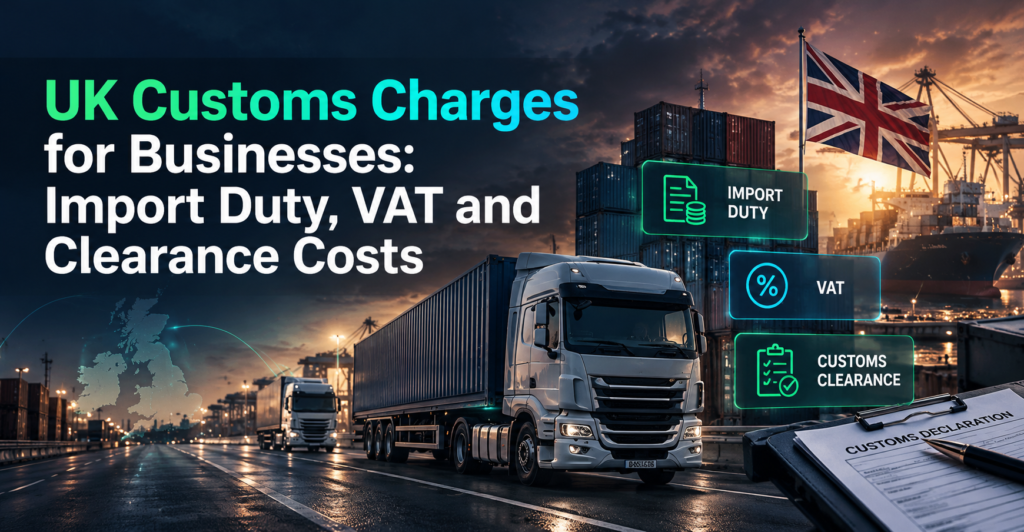
UK Customs Charges: Import Duty, VAT & Clearance Costs

An unexpected customs bill can turn a profitable import into an expensive business decision. For UK businesses buying products, raw materials, machinery, or packaging from overseas suppliers, customs charges are an important part of calculating the real cost of importing goods. The supplier’s invoice may show the purchase price, but additional expenses can arise when goods enter the country. These expenses may include Customs Duty, import VAT, customs clearance charges, handling fees, and other costs related to transporting the shipment. Understanding UK customs charges before placing an order helps businesses prepare realistic budgets, protect their profit margins, and avoid unpleasant surprises when goods arrive. This guide explains how import duty and VAT work, what customs clearance costs may include, and how businesses can estimate their total import expenses. What Are UK Customs Charges? UK customs charges are taxes, duties, and service fees that may arise when goods are imported into the country. The amount payable depends on factors such as the type of product, its customs value, country of origin, applicable trade arrangements, and the services required to clear and deliver it. The main costs businesses should understand are: Import duty: A government charge that may apply to imported goods, depending on their classification and applicable tariff rules. Import VAT: VAT charged on eligible imports, calculated using the relevant import VAT value. Customs clearance charges: Fees charged by a customs agent, freight forwarder, or other service provider for handling the clearance process. Additional shipping costs: Depending on the shipment, these may include handling, storage, transport, insurance, or other applicable fees. These charges are not all the same. The amount paid to HMRC for duty or VAT is separate from the money a business pays a customs agent to handle its paperwork. Some shipments may also qualify for reliefs or special arrangements. Why UK Customs Charges Matter for Businesses Customs expenses directly affect how much a business pays to bring products into the UK. If these costs are not included in the original budget, the final landed cost can be much higher than expected. 1. Protecting Profit Margins Imagine a retailer importing products at a competitive purchase price. If the business overlooks import VAT, applicable duty, and clearance fees, its actual cost per item may increase significantly. This matters when setting wholesale prices, retail prices, or promotional discounts. Understanding the full cost helps businesses decide whether an overseas supplier offers genuine value. 2. Planning Cash Flow Some import expenses must be paid before goods can be released or delivered. Businesses need to understand when payments are due and whether any available VAT accounting or customs arrangements suit their circumstances. Accurate planning can reduce the risk of having goods ready to move but insufficient funds available to cover outstanding charges. 3. Avoiding Clearance Delays Incorrect product classifications, missing documents, or inconsistent shipment information can lead to customs queries and additional work. Preparing accurate paperwork before dispatch helps reduce avoidable problems. It is particularly important for businesses importing regularly or handling goods subject to additional controls. 4. Making Better Supplier Decisions A supplier offering a lower product price may not produce the lowest overall cost once transport, taxes, and clearance are considered. Comparing the complete import cost gives businesses a more reliable basis for choosing suppliers and negotiating purchasing terms. What Is Import Duty in the UK? Import duty, commonly referred to as Customs Duty, is a charge that may apply when goods enter the UK customs system. To work out the duty on a shipment, businesses need to identify the product correctly, establish where it originates, determine its customs value, and check whether any special tariff arrangements apply. How Is Import Duty Calculated? For many goods, the duty calculation uses the customs value multiplied by the applicable duty rate. However, some products may be subject to specific duties or other calculation methods. A simplified example: Calculation Illustrative Amount Customs value £10,000 Assumed duty rate 5% Import duty £500 This example assumes a 5% rate purely to demonstrate the calculation.This percentage is used only to explain the calculation and should not be used when budgeting for a real shipment. To identify the correct rate, businesses should use the official UK Trade Tariff and check the commodity code, origin, and applicable measures. Why the Commodity Code Matters A commodity code identifies the goods being imported. The classification helps determine the applicable duty rate and whether licences, certificates, or additional requirements may apply. For example, different types of machinery, clothing, food products, and packaging materials may fall under different tariff classifications. Choosing a code based only on a general product description can lead to an incorrect calculation. Businesses should check the product specifications and seek professional classification support where necessary. Can a Business Reduce Import Duty? In some circumstances, a business may pay a lower rate or qualify for relief. A business can benefit from a special customs arrangement only when its goods and circumstances satisfy the relevant eligibility criteria. Possible considerations include: Reduced duty rates available through qualifying international trade deals. The origin of the goods and the evidence required to support a preference. Eligibility for a customs relief or special procedure. Correct classification of the imported product. A product being shipped from a particular country does not automatically mean it qualifies as originating there for preferential tariff purposes. Check the relevant origin rules before including any expected savings in your budget. Understanding Import VAT in the UK Import VAT is VAT that may be due when goods enter the UK. For many goods, the applicable rate follows the rate that would generally apply to the same goods supplied within the UK. Depending on the type of goods and their circumstances, a business might qualify for a lower VAT rate, a zero rate, or a specific import scheme. The VAT rate should therefore be checked for the particular goods rather than assumed to be identical for every import. How Is Import VAT Calculated? Import VAT is not necessarily calculated on the purchase invoice

UK Customs Charges: Import Duty, VAT & Clearance Costs Read More »

Freight forwarder UK helping businesses transport goods by road, sea, and air

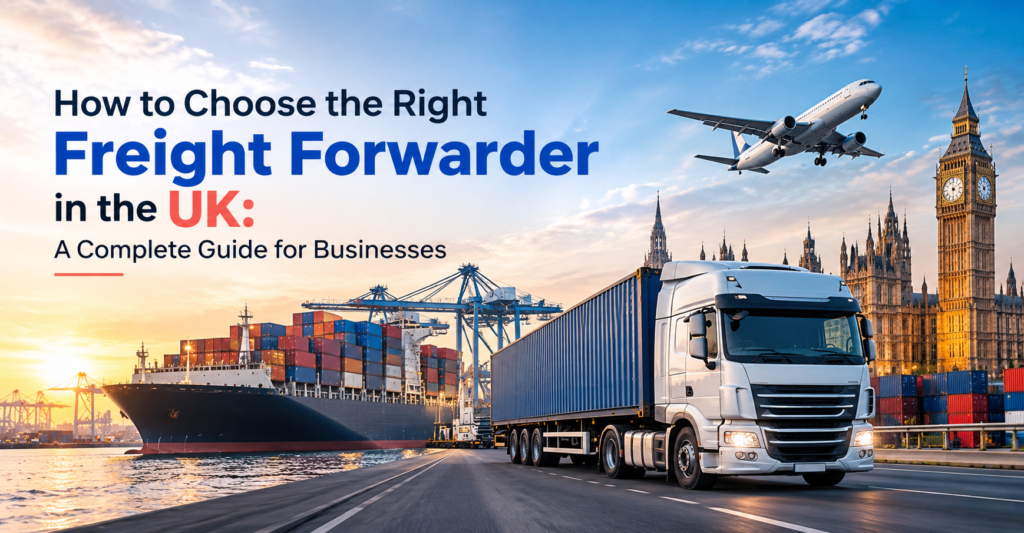
How to Choose the Right Freight Forwarder in the UK: A Complete Guide for Businesses

A shipping delay can cost your business more than money—it can cost you a customer’s trust. For UK businesses that import raw materials, export finished goods, or sell products internationally, choosing the right freight partner can make a significant difference. The right provider can help you manage shipping costs, understand customs requirements, coordinate deliveries, and keep your supply chain running smoothly. However, not every freight forwarder offers the same services or level of support. Some specialise in sea freight, while others focus on air cargo, road transport, or time-sensitive deliveries. This guide explains how to choose a freight forwarder UK businesses can rely on, what to compare before signing a contract, and which warning signs to watch for. What Is a Freight Forwarder? A freight forwarder is a company that organises the transportation of goods from one location to another. A freight forwarder brings together the transport arrangements needed to move goods between suppliers, warehouses, and customers, including shipments that cross international borders. Freight forwarders may handle different parts of the shipping process, depending on the services their business provides: Air, sea, road, or rail transportation Import and export documentation Customs clearance support Cargo insurance arrangements Warehousing and storage Shipment tracking and delivery coordination Advice on shipping routes and transport options For example, a UK retailer importing furniture from another country may use a freight forwarder to coordinate collection, international transport, customs procedures, and final delivery. Instead of contacting several transport companies separately, a business can work with one forwarding partner to organise the different stages of a shipment. Why Choosing the Right Freight Forwarder Matters Freight forwarding affects more than the movement of goods. It can influence your operating costs, stock availability, customer experience, and ability to meet delivery commitments. 1. Better Control Over Shipping Costs International shipping costs can include transportation, fuel surcharges, handling fees, customs-related charges, storage, and final delivery. A reliable freight forwarder should explain which charges are included in a quotation and which may be billed separately. This makes it easier to compare providers fairly and prepare an accurate logistics budget. 2. Fewer Avoidable Delays Shipments can be delayed by incomplete paperwork, customs queries, missed collection times, or disruptions along the transport route. Reviewing paperwork requirements before a shipment leaves can help businesses avoid preventable errors. A knowledgeable freight partner can flag missing details and explain what needs to be corrected. Our complete guide to import and export documentation explains the key shipping documents and the mistakes that most often hold up cargo. 3. Smoother Customs Procedures International shipments may require customs declarations, commodity codes, commercial invoices, and other supporting documents. The exact requirements depend on the goods, destination, origin, and applicable trade rules. A freight forwarder familiar with your shipping routes can help you understand the process and coordinate the required paperwork. 4. A More Reliable Customer Experience Late deliveries can leave retailers without stock and manufacturers waiting for essential materials. Working with a logistics partner that provides realistic delivery estimates and timely updates helps businesses communicate more accurately with suppliers and customers. For online sellers, this matters most when replenishing stock at fulfilment centres, where dedicated Amazon FBA UK logistics support can help keep listings in stock. 5. More Efficient Business Operations When shipment coordination is handled by a suitable logistics provider, your team can spend less time chasing transport updates and resolving routine shipping issues. Businesses managing shipments from different suppliers or delivering orders to several destinations may find it easier to coordinate their logistics with a suitable freight forwarding partner. 8 Factors to Consider When Choosing a Freight Forwarder UK Businesses Need A low shipping price does not necessarily mean better value for your business. 1. Check Their Experience With Your Type of Cargo Start by finding out whether the provider regularly handles goods similar to yours. Shipping requirements can vary significantly between industries. Food products, machinery, clothing, electronics, chemicals, and fragile goods may involve different handling, documentation, or storage considerations. Ask potential providers: Have you handled similar shipments before? Do you understand the requirements for my products? Can you manage the routes and destinations I use? What challenges are common for this type of cargo? For example, a business importing delicate electronic equipment may need careful handling arrangements and suitable cargo protection. A company exporting bulky machinery may prioritise loading capacity, route planning, and specialised transport. Choose experience that matches your actual shipping needs rather than relying only on how long a company has operated. 2. Compare Available Freight Forwarding Services Your preferred provider should offer transport options suited to your shipment size, budget, and delivery deadline. Transport Option Best Suited For Main Consideration Air Freight Urgent or high-value shipments Usually higher transport costs Sea Freight Large, heavy, or less time-sensitive cargo Longer transit times Road Freight UK and suitable European routes Border procedures and road conditions Rail Freight Certain international routes requiring a balance of speed and cost Route availability and transfer arrangements Multimodal Freight Shipments using two or more transport methods Coordination between transport stages Not every freight forwarder provides every option. Ask which services are available for your specific route and whether the company works with external carriers. For example, a retailer facing low stock levels may need a faster delivery option, whereas an importer ordering a full container of packaging supplies might focus on keeping transport expenses under control. For larger or less urgent consignments, sea freight to UK with FCL or LCL options is often the more cost-effective route. The right choice depends on the value of the goods, shipment volume, urgency, and the financial impact of a delay. 3. Understand Their Customs Clearance Support Customs requirements deserve careful attention when goods cross international borders. A freight forwarder may prepare or coordinate customs documentation, work with customs agents, and help identify information required for a declaration. However, the exact responsibilities depend on your agreement. Before choosing a provider, ask: Who prepares and submits customs declarations? What information must my business supply? Are customs clearance

How to Choose the Right Freight Forwarder in the UK: A Complete Guide for Businesses Read More »

© 2026 NN Freight | All Rights Reserved | Developed by The Red Eyes