
A low shipping quote can quickly become an expensive mistake when extra charges appear later.
For businesses shipping goods to the United Kingdom, understanding the full cost of transportation is essential for protecting profit margins and meeting delivery commitments. The price you receive from a carrier may cover only the main journey, while customs clearance, handling, insurance and final delivery can increase the total expense.
International shipping costs vary according to the origin country, shipment size, transport method, cargo type and delivery requirements. Import taxes and customs procedures can also affect the final amount a business pays.
Whether you are sending products to UK customers, supplying a retailer or moving commercial goods between countries, planning these expenses in advance helps you make better decisions. This guide explains how shipping costs to the UK are calculated, which charges to consider and how businesses can manage their freight budgets more effectively.
What Are International Shipping Costs?
International shipping costs are the expenses involved in moving goods from one country to another. They can include transportation, export handling, freight documentation, customs services, insurance and delivery to the final destination.
The total depends on the services included in your quotation. Two providers may offer different prices for the same shipment because one quote includes additional handling or delivery services that the other excludes.
Businesses should therefore compare the complete shipping cost rather than choosing a provider based only on the initial freight rate.
Why Do International Shipping Costs Matter for Businesses?
Shipping expenses affect more than the logistics budget. They influence product pricing, profit margins, stock availability and customer satisfaction.
For example, an online retailer importing products into the UK may calculate its selling price using the supplier’s product cost and the quoted freight rate. If customs fees, storage or local delivery charges were not included, the actual cost per product could be considerably higher than expected.
Accurate cost planning helps businesses:
- Protect profit margins: Include shipping and related expenses when calculating product costs.
- Plan cash flow: Prepare for freight payments, taxes and other charges before goods arrive.
- Set realistic delivery expectations: Choose a shipping method that matches the required timeline.
- Price products more accurately: Account for logistics costs when setting wholesale or retail prices.
- Reduce unexpected expenses: Identify possible surcharges before confirming a shipment.
What Factors Affect Shipping Costs to the UK?
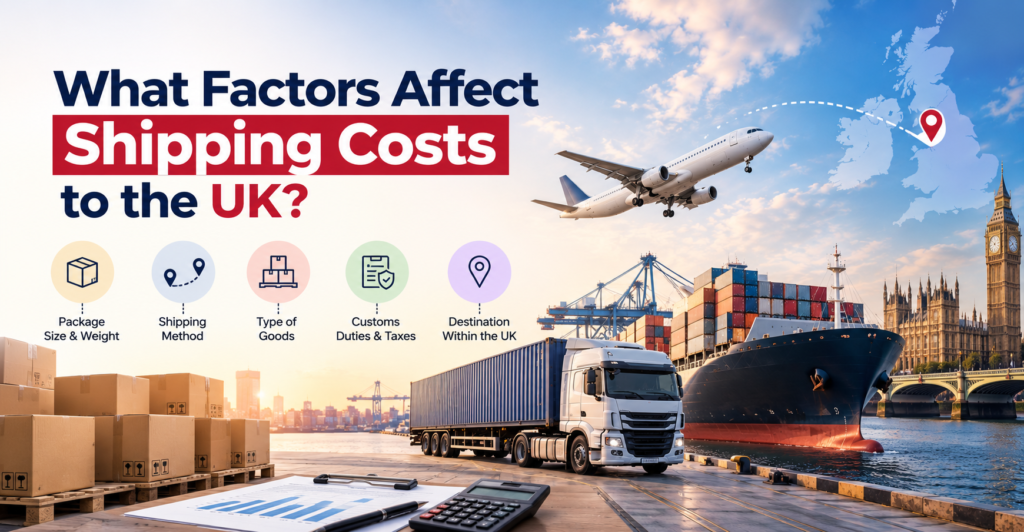
Several factors determine the final freight quotation. Understanding them helps businesses identify where savings may be possible.
1. Shipping Method
The transport method is one of the biggest factors affecting international freight costs.
- Air freight: Suitable for urgent, valuable or time-sensitive goods. It generally costs more per unit than sea freight.
- Sea freight: Often suitable for bulky or heavy commercial shipments that can accommodate longer transit times.
- Express courier: Useful for documents, samples and smaller parcels that need quick delivery.
- Road or rail freight: May be suitable for particular European or intermodal routes, depending on the origin, destination and available services.
The cheapest option is not always the most economical overall. Delayed stock can affect sales, while urgent air freight may be unnecessary for products that can be shipped well in advance.
2. Shipment Weight and Dimensions
Carriers assess shipment weight and size when calculating freight charges. Depending on the service, they may use actual weight or dimensional weight, which reflects the space a parcel occupies.
For example, a large box containing lightweight goods may cost more to transport than a compact box with the same actual weight.
Businesses can control this expense by using appropriately sized cartons, avoiding unnecessary empty space and confirming packing requirements before booking.
3. Origin and Destination
The shipping route affects freight rates. Costs can change depending on the distance to the departure port or airport, available transport capacity, destination handling and the final delivery postcode.
A shipment travelling to a major UK distribution hub may have different inland delivery expenses from one going to a remote location. Businesses should request pricing for the complete route rather than only the international journey.
4. Cargo Type and Special Handling
Standard commercial goods are usually easier to price than cargo requiring special arrangements.
Fragile items, oversized machinery, temperature-sensitive products and certain regulated goods may require additional packaging, documentation, equipment or handling. These requirements can increase the total cost.
Provide accurate cargo details when requesting a quotation so that the provider can identify relevant charges before collection.
5. Seasonal Demand and Fuel Charges
Freight rates can change with fuel prices, available capacity, port congestion, peak-season demand and wider disruptions to shipping routes.
A quotation received several weeks before dispatch may not remain valid indefinitely. Confirm the quote’s validity period and ask which charges could change before the goods leave.
How to Calculate International Shipping Costs
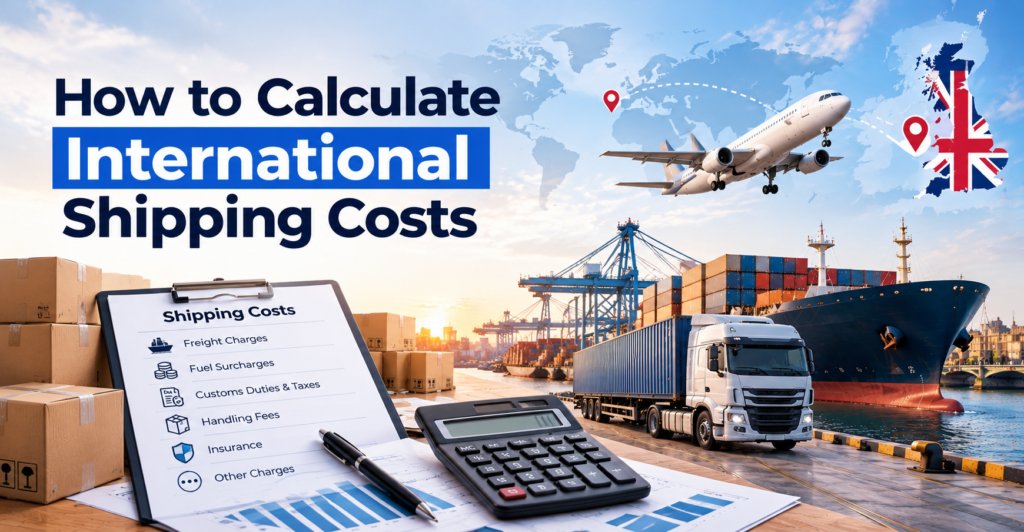
A useful shipping budget should include the main freight charge and any additional expenses required to get the goods to their destination.
Depending on the shipment, the calculation may include:
- Supplier collection and origin handling
- International freight
- Export documentation and clearance
- Cargo insurance
- Destination handling and terminal charges
- Customs agent or clearance fees
- Import duty and import VAT, where applicable
- Storage, inspection or special handling charges
- Final delivery within the UK
An Illustrative Shipping Cost Example
Imagine a business imports commercial goods into the UK. Its initial freight quotation is £800, but the shipment also requires £150 in handling, £100 for customs services and £200 for final delivery.
The estimated logistics expenses would be:
| Cost item | Illustrative amount |
|---|---|
| International freight | £800 |
| Handling charges | £150 |
| Customs service fee | £100 |
| Final delivery | £200 |
| Total listed logistics costs | £1,250 |
These figures are examples for explaining the calculation, not current market rates or a real quotation. Import duty, import VAT, insurance and other applicable charges have not been included in this example.
The lesson is simple: ask for an itemised quotation and confirm what is excluded before calculating your total landed cost.
Understanding UK Customs Charges and Import Taxes
Freight charges and customs charges are different. Freight pays for transportation and related services, while import duty and import VAT are taxes that may apply to goods entering the UK.
The amount payable depends on factors such as the goods’ tariff classification, customs value, origin and applicable customs arrangements. Businesses should check the relevant requirements before shipping. GOV.UK provides a step-by-step guide to importing goods into the UK, including customs declarations and duty requirements.
For a more detailed explanation of taxes and clearance expenses, see UK Customs Charges for Businesses: Import Duty, VAT and Clearance Costs.
Businesses should also check whether they need a GB EORI number for imports into England, Scotland or Wales, and whether additional licences or certificates apply to their goods. Requirements can differ for Northern Ireland and for certain product categories.
Common Hidden Costs Businesses Should Check
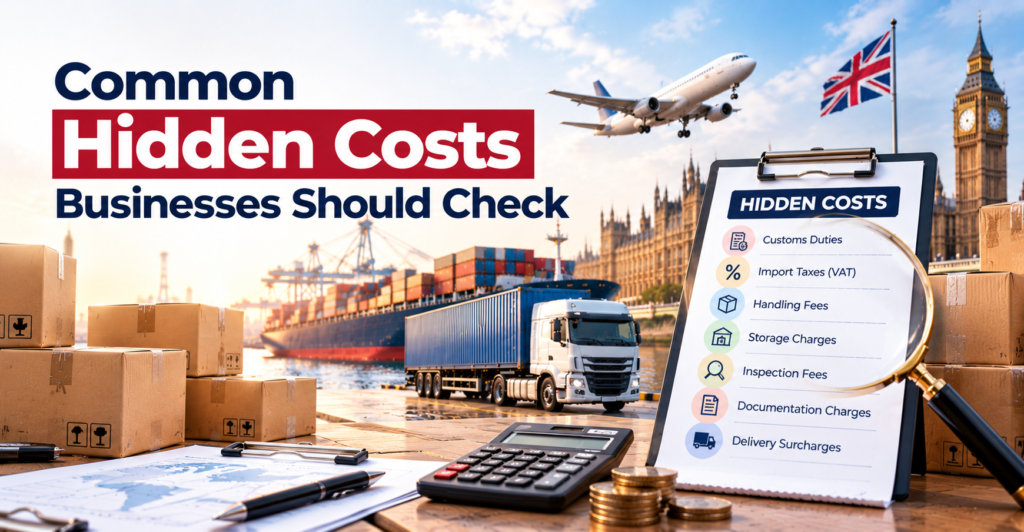
Some shipping expenses are not obvious when businesses first compare quotations. Ask your freight provider whether the following could apply:
- Origin and destination handling: Charges for moving or processing cargo at transport facilities.
- Customs clearance services: Fees for preparing declarations or handling customs procedures.
- Storage and demurrage: Possible charges when cargo or containers remain at a facility beyond the permitted period.
- Inspection fees: Expenses associated with checks required for particular goods or shipments.
- Remote-area delivery: Additional costs for locations outside standard delivery zones.
- Insurance: Optional or contract-dependent protection against certain cargo losses or damage.
- Redelivery or waiting charges: Fees that may apply when collection or delivery cannot be completed as planned.
Not every shipment will incur these charges. Ask for a written breakdown of possible additional fees and find out when they become payable.
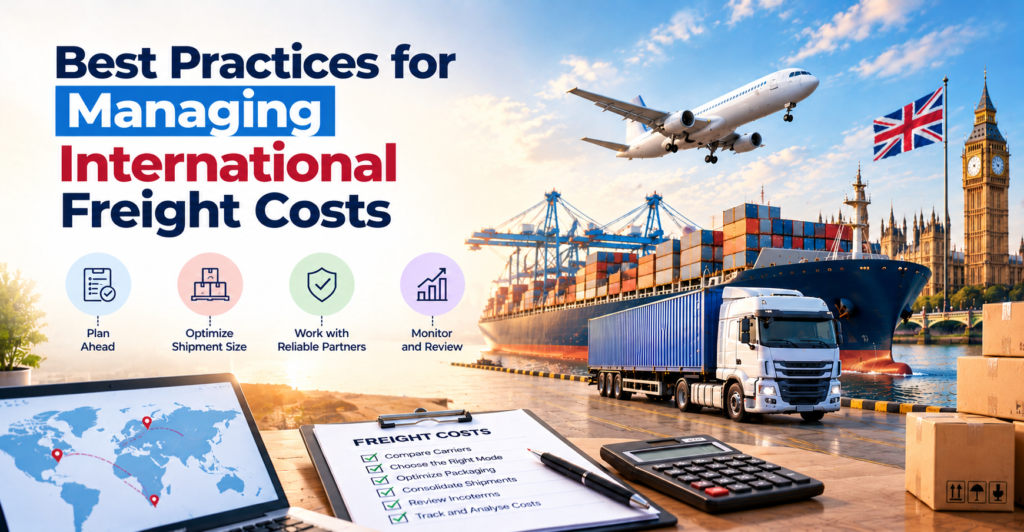
Best Practices for Managing International Freight Costs
Compare Complete Quotations
Request quotations using the same shipment weight, dimensions, origin, destination and delivery requirements. Check whether collection, customs services, destination handling and final delivery are included.
A cheaper headline price may not represent the best value if several essential services are excluded.
Choose the Right Transport Method
Match the shipping method to the shipment’s urgency, size and commercial value. Use faster services when the delivery deadline justifies the expense, and consider slower options for planned replenishment or larger shipments.
Plan Shipments in Advance
Last-minute bookings can limit your available choices. Forecast stock requirements, prepare documents early and allow enough time for customs processing and potential delays.
Improve Packaging and Shipment Preparation
Use packaging that protects goods without adding unnecessary volume or weight. Make sure shipment details, labels, invoices and product descriptions are accurate. Incorrect information can cause delays and additional handling.
Confirm Responsibilities Before Booking
Agree on who arranges collection, export procedures, import declarations, taxes and final delivery. International commercial contracts may use Incoterms to clarify certain responsibilities and costs, but the agreed term and contract must be checked carefully.
Review Your Freight Spending Regularly
Track the total cost of each shipment, including additional fees and delays. Over time, this information can help you identify expensive routes, improve forecasting and negotiate services that better suit your business.
How to Choose a Freight Forwarder for UK Shipping
A reliable freight forwarder can help coordinate transport, documentation and the different stages of an international shipment. When comparing providers, look beyond the quoted price.
Consider their experience with your route and cargo type, the clarity of their quotations, their communication process and the services they can arrange. Ask how they handle delays, customs queries and unexpected charges.
For more guidance on comparing providers, read How to Choose the Right Freight Forwarder in the UK: A Complete Guide for Businesses.
International Shipping Trends Businesses Should Watch
International shipping costs can change as global freight capacity, fuel prices, trade rules, port conditions and demand shift. Businesses operating across borders should monitor these factors instead of relying on a single annual estimate.
Digital shipment tracking and better logistics data can also help businesses monitor progress, identify delays and communicate more clearly with customers. However, tracking technology does not remove the need for accurate documentation, suitable packaging or realistic delivery planning.
A practical approach is to review shipping quotations regularly, keep alternative transport options in mind and build reasonable contingency allowances into the logistics budget.
Expert Recommendations for Controlling Shipping Expenses
Before confirming an international shipment, use this checklist:
- Confirm the cargo’s weight, dimensions, quantity and handling needs.
- Compare suitable freight methods and delivery timelines.
- Request an itemised quotation with exclusions clearly stated.
- Check the applicable customs classification, origin requirements and import taxes.
- Confirm who is responsible for customs declarations and payments.
- Review insurance options and liability terms.
- Verify delivery arrangements, quote validity and possible surcharges.
- Keep invoices, shipping documents and cost records for future planning.
The objective is not simply to find the lowest freight rate. It is to understand the complete cost of moving goods safely and reliably to the UK.
Conclusion
International shipping costs can significantly affect a business’s profitability, particularly when additional fees are discovered after a shipment has been booked. By comparing complete quotations, choosing an appropriate transport method and preparing customs documentation correctly, businesses can reduce avoidable expenses and plan imports with greater confidence.
Every shipment has different requirements, so accurate costing begins with clear cargo information and a clear understanding of the services needed. Working with an experienced logistics partner can also make it easier to coordinate transport and manage the shipping process.
For businesses shipping goods to the UK, careful planning can help control costs, protect delivery schedules and support smoother international trade. NN Freight Ltd can be a useful starting point for businesses looking for freight services to support their shipping requirements and keep their logistics operations organised.
Frequently Asked Questions
1. What affects international shipping costs the most?
The main factors are the transport method, shipment weight and dimensions, route, cargo type and delivery requirements. Fuel charges, handling, insurance and customs-related expenses may also affect the final amount. The exact combination depends on the shipment and the services included in the quotation.
2. What is the cheapest way to ship goods to the UK?
Sea freight is often suitable for larger shipments that can tolerate longer transit times, while courier services may be practical for small parcels. The most economical option depends on shipment size, urgency, origin, destination and additional fees. Compare the total cost before making a decision.
3. How can I calculate shipping costs to the UK?
Start with the freight quotation, then add applicable collection, handling, documentation, insurance, customs service and final-delivery costs. Consider import duty and VAT separately where relevant. Request an itemised quote because providers may include different services in their headline prices.
4. Are customs charges included in international shipping costs?
Not always. Some quotations include customs clearance services, but this does not necessarily mean import duty or VAT is included. Ask the provider to distinguish its service fees from taxes payable to the relevant authorities and clarify who is responsible for each payment.
5. Does shipment weight affect international freight costs?
Yes. Carriers may price shipments using actual weight or dimensional weight, depending on the service. Large, lightweight packages can therefore cost more than expected. Accurate measurements and efficient packaging help businesses receive more reliable quotations and avoid certain pricing surprises.