
One missing shipping document can delay an entire international shipment.
For businesses involved in global trade, import and export documentation is an essential part of moving goods across borders. Even when products are packed and ready to ship, incorrect invoices, incomplete customs declarations or missing certificates can create delays, unexpected costs and extra administrative work.
International shipping involves more than arranging transportation. Businesses must provide accurate information about their products, shipment value, origin, destination and intended use. Depending on the goods and route, they may also need licences, permits or proof of origin.
Whether you are exporting products to overseas customers or importing stock into the UK, preparing the right paperwork helps keep shipments organised and supports customs compliance.
This guide explains the essential international shipping documents, why they matter, common documentation mistakes and practical ways to prepare your paperwork more efficiently.
What Is Import and Export Documentation?
Import and export documentation refers to the paperwork and electronic records used to identify goods, confirm commercial transactions, arrange transportation and complete customs procedures when products move between countries.
These documents help customs authorities assess shipments and determine whether goods meet the applicable import or export requirements. They also help freight forwarders, carriers, suppliers and buyers coordinate their responsibilities.
The documents required depend on the product, the countries involved, the transport method and any applicable trade restrictions. Some documents are commonly used for commercial shipments, while others are needed only for particular goods or circumstances.
Why Is Import and Export Documentation Important?
Accurate documentation helps businesses move goods through international supply chains with fewer avoidable problems.
1. Supports Customs Clearance
Customs authorities use shipment information to assess declarations, identify products and determine whether duties, taxes or regulatory requirements apply. Missing or inconsistent information can lead to questions, delays or additional checks.
2. Helps Prevent Unexpected Costs
Missing details or errors in shipping documents can lead to extra costs, such as warehouse storage, additional handling and document correction fees. Preparing documents before dispatch gives businesses more time to identify mistakes and correct them.
3. Improves Communication Between Trading Partners
Suppliers, buyers, freight forwarders and customs agents often rely on the same shipment information. Consistent product descriptions, quantities and values help everyone work from the same details.
4. Creates Better Business Records
Invoices, transport documents and customs records help businesses track shipments, reconcile payments and maintain evidence for accounting or compliance purposes.
For example, a UK retailer importing 500 units of a product should ensure that the commercial invoice, packing list and customs declaration accurately reflect the shipment. A discrepancy in quantity or value could lead to unnecessary questions and additional work.
Essential International Shipping Documents Every Business Should Know
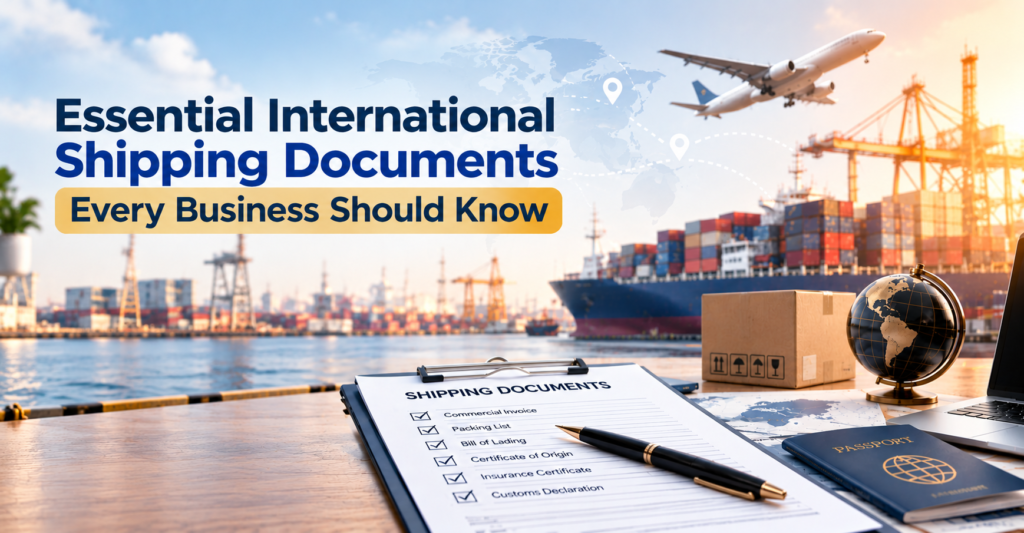
The exact paperwork varies by shipment. However, the following documents are important to understand when preparing international freight.
1. Commercial Invoice
A commercial invoice sets out the details of a sale, including the goods being sold and the parties involved in the transaction. It provides information used for customs processing and helps establish the goods’ declared value.
A commercial invoice commonly includes:
- Exporter and buyer details
- Invoice number and date
- Detailed product descriptions
- Quantities and unit prices
- Total invoice value and currency
- Country of origin, where required
- Relevant delivery terms or Incoterms
- Other information required for the shipment
Avoid vague descriptions such as “general goods.” Describe the products clearly enough for the relevant parties to identify them.
2. Packing List
A packing list explains how the shipment is packed. It may include the number of cartons, package contents, gross and net weights, dimensions and package markings.
This document helps freight handlers and customs personnel compare the physical shipment with its accompanying records.
For example, if an invoice lists 100 products but the packing list describes only 90, the difference should be checked before dispatch.
A packing list does not replace a commercial invoice because the two documents serve different purposes.
3. Bill of Lading
A bill of lading is a key transport document used in sea freight. Depending on its type and the terms involved, it can serve as evidence of the contract of carriage, a receipt for the goods and, in some cases, a document of title.
It generally identifies the shipper, consignee, cargo, loading port and destination details.
Businesses should check names, addresses, cargo descriptions and shipment references carefully. Errors can complicate cargo release or require document amendments.
4. Air Waybill
When goods are sent by plane, an Air Waybill (AWB) accompanies the shipment and contains key information about the cargo and its carriage. It records shipment and carriage information and helps identify the goods as they move through the air freight network.
Unlike a negotiable bill of lading, a standard air waybill is not a document of title.
Make sure the shipper and consignee details, package count, weight and destination information match the booking and other shipping records.
5. Customs Declaration
Importers and exporters submit a customs declaration to report shipment details to the customs authority responsible for processing the goods.
Depending on the shipment, it may include the commodity code, customs value, country of origin, quantity, procedure details and other required information.
Companies handling customs procedures in Great Britain will usually need a GB EORI number. Businesses moving goods through Northern Ireland should check the separate identification rules that apply to their situation. An authorised customs agent or freight forwarder may be able to submit declarations on a business’s behalf.
6. Certificate of Origin and Other Origin Evidence
Documents confirming a product’s origin help establish its country of origin for trade and customs purposes. The evidence needed can vary according to the importing market, the goods involved and the terms of the trade agreement, if applicable.
Proof of origin can also be relevant when a business wants to claim preferential duty treatment under a trade agreement.
The place where a shipment begins its journey does not necessarily establish the goods’ origin. Origin is assessed using the relevant trade rules and the circumstances in which the products were made or processed.
7. Import and Export Licences or Certificates
Some goods cannot cross borders without specific authorisations, licences or extra paperwork being in place.
Examples may include regulated food products, plants, animal products, medicines, chemicals, controlled goods and particular types of equipment. The documents and approvals needed for a shipment vary with the type of goods, the countries involved and the regulations applicable at the time.
Businesses should check the relevant commodity code and official guidance early enough to obtain any required approvals before shipping.
8. Insurance Documents
Cargo insurance documents provide details of the insurance cover arranged for a shipment, where applicable.
They may identify the insured goods, covered journey, insured value and relevant policy conditions. The extent of protection depends on the policy, exclusions and terms.
Businesses should review their coverage rather than assuming that the carrier’s standard liability will reimburse the full value of lost or damaged goods.
Import and Export Documentation Requirements for UK Shipments
Businesses trading with the UK should confirm the requirements for their particular route and products before dispatch.
For imports into Great Britain, common steps include obtaining the appropriate EORI number, identifying the correct commodity code, preparing supporting paperwork and ensuring the customs declaration is completed correctly.
For exports from Great Britain, businesses should check whether an export declaration is required, identify any product-specific restrictions and confirm the destination country’s import rules.
The paperwork can vary depending on whether goods are shipped by air, sea, road or courier. Northern Ireland may also follow different arrangements for certain movements.
Useful official resources include:
- Import goods into the UK
- Export goods from the UK
- Find the correct commodity code
These resources can help businesses identify the applicable procedures instead of relying on a general checklist alone.
Common Documentation Mistakes That Delay Shipments
Even experienced businesses can make paperwork errors when shipment details are prepared by different teams or suppliers.
Inaccurate Product Descriptions
Descriptions that are too vague may make it difficult to identify the goods correctly. Use clear descriptions and confirm the applicable commodity code.
Incorrect Shipment Values
The declared value must follow the relevant customs valuation rules. Check the invoice figures, currency and any other value information required for the declaration.
Mismatched Quantities or Weights
The invoice, packing list and transport records should be consistent wherever they describe the same shipment details. Investigate differences before the goods leave.
Missing Licences or Certificates
Some products cannot be moved through the required customs process without specific permissions or supporting evidence. Check these requirements before booking transport.
Incorrect Consignee Details
An incorrect company name, address or contact detail can create avoidable communication and delivery problems. Confirm the information with the receiving party.
Leaving Documentation Until the Last Minute
Preparing paperwork just before collection leaves less time to resolve errors. Establish a document checklist and collect the required information as early as possible.
Best Practices for Managing International Shipping Documents
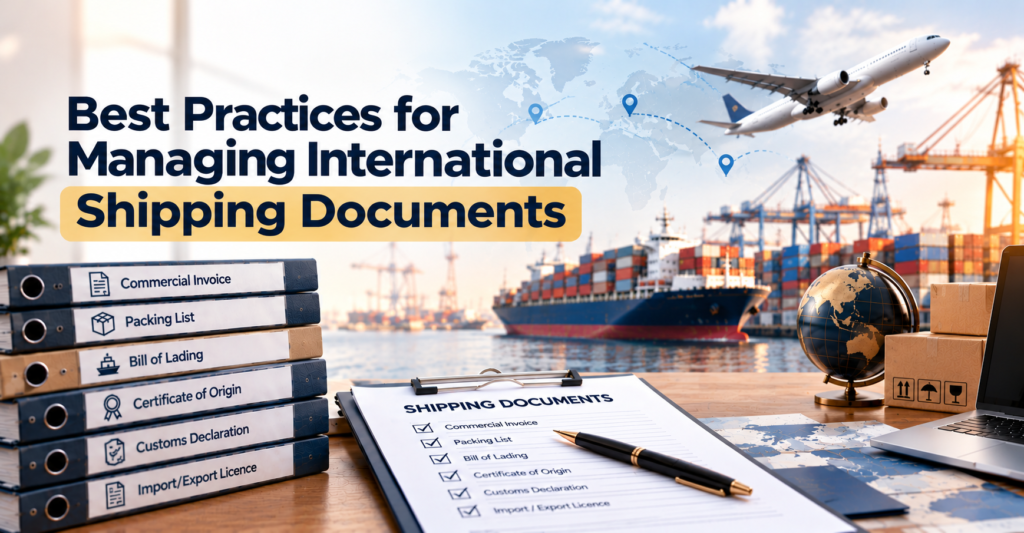
Businesses can improve their documentation process by following a consistent procedure for every shipment.
- Create a shipment checklist: List the documents required for the specific goods, origin, destination and transport method.
- Use consistent product information: Keep descriptions, quantities, weights and shipment references aligned across records.
- Check commodity codes: Use the relevant official tariff tool and seek specialist assistance when classification is uncertain.
- Verify country-of-origin information: Check whether proof of origin or other evidence is required.
- Prepare documents before dispatch: Allow time for corrections, approvals and customs arrangements.
- Keep digital copies: Store invoices, declarations, transport documents and certificates in an organised location.
- Confirm responsibilities: Establish who prepares the documents, submits declarations and provides supporting information.
- Review changes: Update the paperwork if shipment quantities, routing or other important details change.
A simple internal review before dispatch can help catch inconsistencies while there is still time to correct them.
How a Freight Forwarder Can Help With Shipping Documentation
International shipping involves several parties, and coordinating their paperwork can become challenging when a business handles multiple shipments or unfamiliar routes.
A freight forwarder can help coordinate transport arrangements and, depending on the services agreed, assist with documentation and customs clearance. Businesses should confirm exactly which tasks the provider will perform and which responsibilities remain with the importer or exporter.
When choosing a logistics partner, ask about experience with your shipment type, the documents required, communication procedures and how documentation issues are handled.
Industry Trends: Digitalisation of Shipping Documents
International logistics is increasingly using digital systems to exchange shipment information, manage declarations and track freight movements.
Electronic records can help reduce repeated data entry, improve document access and make it easier for businesses to identify missing information. However, digitalisation does not remove the need for accurate data or compliance with the relevant rules.
Businesses can prepare by maintaining organised digital records, standardising shipment information and confirming whether their logistics partners and destination authorities accept the relevant electronic documents.
Expert Recommendations for Smoother International Shipping
Treat documentation as an essential part of shipment planning, not an administrative task to complete after the goods are ready.
Before dispatch, verify the commercial invoice, packing list, transport document, customs declaration and any licences or origin evidence required for your particular shipment. Confirm that the information matches across the relevant records.
For unfamiliar products or destinations, consult the appropriate customs authority or a qualified customs professional. A little preparation can help prevent avoidable delays and make international shipping more predictable.
Future Outlook
As international supply chains become more connected, businesses will continue to benefit from accurate, accessible and well-organised shipping information.
Digital documentation, integrated logistics platforms and better data exchange may make routine processes more efficient. At the same time, businesses will still need to understand product-specific requirements, maintain reliable records and monitor changes to customs rules.
Companies that build consistent documentation procedures today will be better prepared to manage future shipping demands.
Conclusion
Import and export documentation plays an important role in moving goods across borders efficiently. From commercial invoices and packing lists to customs declarations and product-specific certificates, each document serves a purpose in the shipping process.
The requirements differ according to the goods, route and applicable regulations, so businesses should verify the paperwork needed for every shipment. Accurate information, early preparation and clear communication can help reduce avoidable delays and unexpected expenses.
For businesses looking to organise their international freight requirements, NN Freight Ltd can be a starting point for discussing shipping services and logistics support.
Frequently Asked Questions
1. What is import and export documentation?
Import and export documentation is the paperwork and electronic information used to move goods across international borders. It can include commercial invoices, packing lists, transport documents, customs declarations and any licences or certificates required for the particular goods and destination.
2. What documents are required for international shipping?
Common documents include a commercial invoice, packing list and the appropriate transport document, such as a bill of lading or air waybill. A customs declaration and additional certificates or licences may also be required, depending on the goods, route and applicable regulations.
3. Is a commercial invoice mandatory for every international shipment?
Commercial invoices are commonly used for international commercial shipments because they describe the transaction and provide information for customs processing. Exact requirements can vary by shipment type and destination. Businesses should confirm the applicable rules with their carrier or customs adviser.
4. What is the difference between a bill of lading and an air waybill?
A bill of lading is used for sea freight and can have different legal functions depending on its type. An air waybill is used for air cargo and records carriage details, but a standard air waybill is not a document of title.
5. Do all imports and exports need a certificate of origin?
No. A certificate of origin or other proof of origin is required only when applicable to the shipment, destination rules or a particular trade arrangement. Businesses should check the relevant requirements before shipping and avoid assuming that every consignment needs the same origin documents.