

What Is an Express Courier Service?
An express courier service is a shipping solution designed to deliver parcels, documents and other shipments within a shorter or more predictable timeframe than standard delivery options.
These services are commonly used when businesses need to move urgent shipments quickly, meet customer deadlines or avoid delays in their supply chain.
Depending on the courier provider and destination, express delivery options may include:
- Same-day delivery in selected locations.
- Next-day or overnight delivery.
- Time-definite domestic shipments.
- International express deliveries.
- Priority handling for urgent documents and parcels.
For example, a manufacturer waiting for a critical machine component may choose express delivery to reduce production downtime. Similarly, an online retailer may use a priority courier option to fulfil an urgent customer order.
The exact delivery commitment depends on the service selected, collection time, destination, customs requirements and operational conditions.
Why Choosing the Right Express Courier Service Matters for Businesses
Delivery performance is closely connected to business performance. A shipment that arrives late can interrupt operations, affect customer satisfaction and create additional costs.
Choosing a suitable express courier service helps businesses manage these challenges more effectively.
1. Helps Meet Customer Expectations
Customers increasingly expect businesses to provide clear delivery timelines. When a company communicates a delivery date, customers expect the shipment to arrive within the promised period.
A reliable courier partner helps businesses maintain realistic delivery commitments and improve the overall customer experience.
2. Reduces Operational Disruptions
Some shipments are directly connected to daily business operations. Delayed raw materials, replacement parts or important documents can slow down work.
Express delivery can help businesses move urgent items quickly and reduce the impact of unexpected shipping delays.
3. Supports Business Reputation
A customer’s experience does not end when they place an order. Delivery is another important part of their interaction with a business.
Consistent and dependable deliveries can strengthen customer confidence, while repeated delays may affect how customers view the company.
4. Improves Shipment Visibility
Modern courier services may provide tracking facilities that allow businesses to monitor shipment progress.
This visibility helps teams respond to delivery issues, update customers and plan their next steps more effectively.
5. Supports Time-Sensitive Business Activities
Businesses involved in manufacturing, retail, healthcare supply chains and international trade may regularly handle urgent shipments.
An appropriate express delivery option can help them manage time-sensitive requirements without relying entirely on standard shipping schedules.
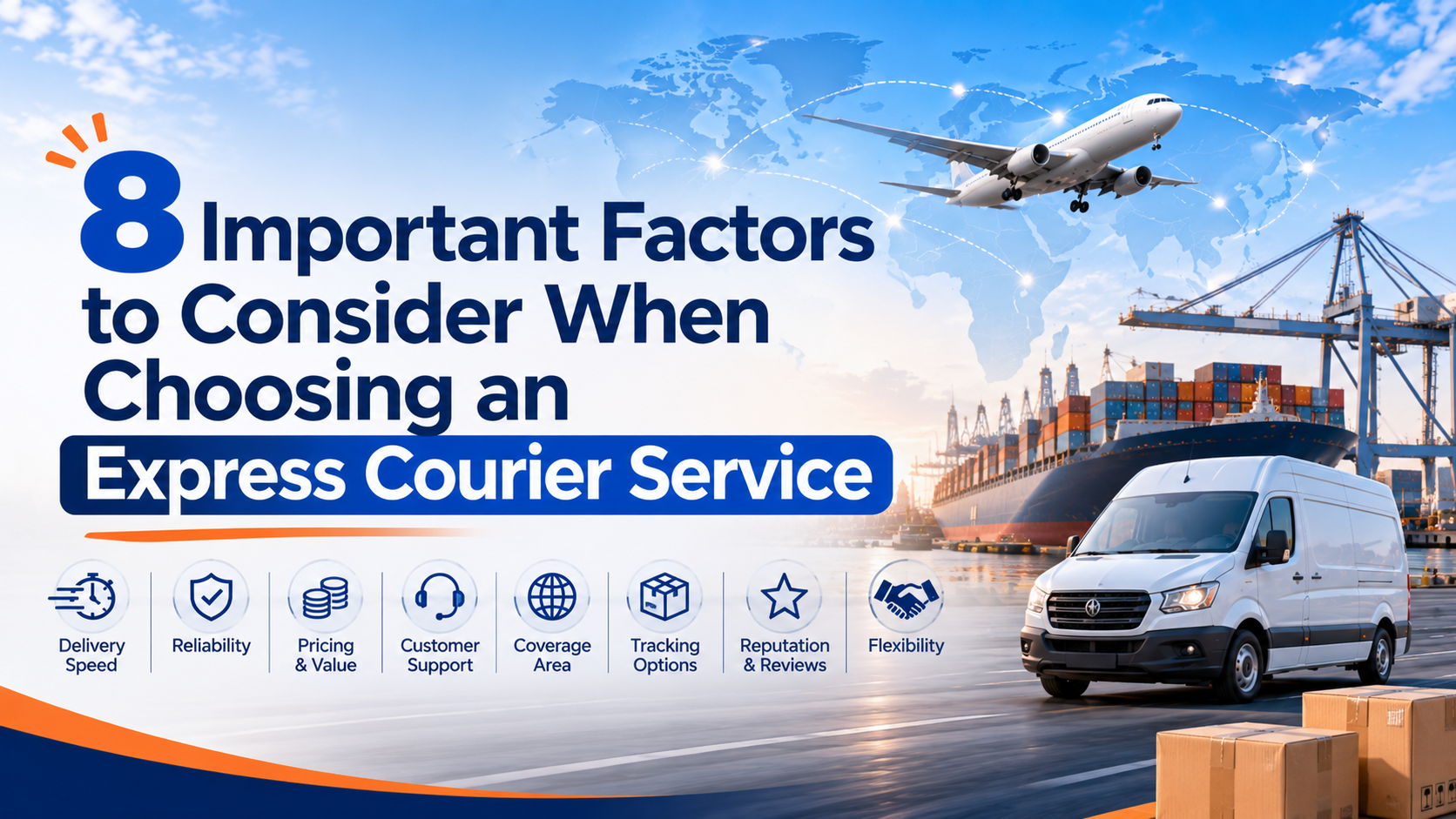
8 Important Factors to Consider When Choosing an Express Courier Service
Before selecting a courier partner, businesses should evaluate more than just the advertised delivery speed. The following factors can help you compare available services.
1. Check Delivery Speed and Guaranteed Timelines
The first factor to consider is how quickly the courier can deliver your shipment.
Different providers offer different delivery options, including next-day, overnight and international express services. However, an advertised delivery timeframe does not always mean every destination is covered by the same commitment.
Before booking, check:
- Expected delivery date and time.
- Available collection schedules.
- Delivery coverage for your destination.
- Weekend and public holiday arrangements.
- Conditions that may affect delivery commitments.
For example, a business sending an urgent contract may need a time-definite delivery option. A company shipping a replacement product may simply require next-day delivery.
Choose a service that matches the actual urgency of your shipment.
2. Evaluate Delivery Reliability
Fast delivery is useful only when the courier can consistently meet its commitments.
A provider may advertise impressive delivery speeds, but businesses should also understand how it handles delays, failed delivery attempts and unexpected operational problems.
Consider asking about:
- Delivery performance and service commitments.
- Procedures for delayed shipments.
- Handling of unsuccessful delivery attempts.
- Customer support availability.
- Escalation procedures for urgent consignments.
Reliability is particularly important for businesses shipping high-value goods or products that customers need by a specific date.
3. Look for Real-Time Tracking Facilities
Shipment tracking gives businesses better visibility throughout the delivery process.
A suitable courier service should provide clear tracking updates, such as shipment collection, transit progress and delivery confirmation, depending on the service offered.
Tracking can help businesses:
- Monitor parcels without repeatedly contacting the courier.
- Identify potential delivery delays.
- Provide customers with shipment updates.
- Plan receiving and inventory activities.
- Maintain records of completed deliveries.
For example, an e-commerce business can use tracking information to answer customer questions about an order’s progress.
When comparing providers, check whether tracking information is easy to access and whether proof of delivery is available.
4. Compare Pricing and Additional Charges
Price is another important consideration, especially for businesses that ship frequently.
However, selecting the cheapest courier without checking the service details can create problems later. Some shipments may involve additional charges depending on their dimensions, weight, destination or delivery requirements.
Ask for a clear breakdown of:
- Base shipping rates.
- Volumetric or dimensional weight charges.
- Fuel surcharges.
- Remote-area delivery fees.
- Customs duties and taxes, where applicable.
- Additional handling or special-service charges.
For international shipments, businesses should also understand how customs clearance and destination-specific charges are handled.
If your business regularly sends goods overseas, understanding International Shipping Costs can help you plan shipping budgets more accurately.
The objective is to compare the total cost of the service rather than looking at the initial quoted price alone.
5. Check Domestic and International Delivery Coverage
Not every courier provider serves every destination equally well.
A company may have strong coverage across major cities but limited services in remote areas or international destinations.
Before choosing a provider, confirm:
- Whether your collection location is covered.
- Whether the destination is serviceable.
- Availability of international express delivery.
- Transit time estimates for your regular routes.
- Customs support for international shipments.
- Delivery arrangements in remote locations.
This is particularly important for businesses that serve customers across different regions or export products to international markets.
For overseas shipments, also consider whether air freight or sea freight is more suitable. The comparison in Sea Freight vs Air Freight: Which Is Better for UK Importers? can help businesses understand how different transport methods suit different shipping requirements.
6. Understand Shipment Handling and Security
Not all parcels can be handled in the same way.
Documents, fragile products, electronic components and high-value goods may require different packaging, handling or delivery arrangements.
Before booking, check whether the courier can accommodate your shipment’s specific requirements.
Important considerations include:
- Packaging guidelines.
- Fragile-item handling procedures.
- Shipment restrictions.
- Insurance or declared-value options.
- Proof of delivery.
- Procedures for lost or damaged shipments.
Businesses should also pack shipments appropriately before collection. Strong packaging, accurate labels and clear handling instructions can reduce avoidable problems during transit.
7. Assess Customer Support and Communication
Even with a reliable courier, unexpected situations can occur. A shipment may face a delay, an address issue or a failed delivery attempt.
In such situations, responsive customer support becomes important.
Look for a provider that offers:
- Accessible customer service channels.
- Timely responses to shipment enquiries.
- Support for urgent delivery issues.
- Clear communication about delays.
- A process for raising and resolving complaints.
For businesses, good communication can be just as valuable as fast transportation. It helps teams manage customer expectations and make informed decisions when something goes wrong.
8. Check Customs and Documentation Support
International express shipments often involve customs procedures and documentation requirements.
Incorrect or incomplete paperwork can lead to clearance delays, additional charges or shipment holds.
Depending on the shipment and destination, businesses may need documents such as:
- Commercial invoices.
- Packing lists.
- Air waybills or other transport documents.
- Certificates or permits where required.
- Customs declarations.
- Product-specific supporting documents.
The exact requirements depend on the goods being shipped, their origin, destination and applicable regulations.
Before selecting a courier for international deliveries, ask how it supports customs clearance and what responsibilities remain with the sender.
Businesses involved in cross-border trade can also refer to this guide on Import and Export Documentation to understand the paperwork commonly involved in international shipping.

Common Challenges Businesses Face When Using Express Delivery Services
Even when businesses choose an express courier option, certain challenges can affect the delivery process.
Understanding these issues can help companies plan shipments more carefully.
Unexpected Delivery Delays
Traffic, severe weather, operational disruptions and customs inspections can affect delivery schedules.
How to manage it: Avoid planning shipments around the final possible delivery window. Build reasonable time into urgent orders and confirm service commitments before dispatch.
Higher Shipping Costs
Express delivery generally costs more than standard shipping because it prioritises speed or a specific delivery timeframe.
How to manage it: Reserve express services for shipments that genuinely need faster transportation. Use standard services for non-urgent consignments where appropriate.
Incorrect Shipment Information
Wrong addresses, incomplete contact details and inaccurate shipment descriptions can cause delivery problems.
How to manage it: Verify recipient details, parcel dimensions, weight and documentation before collection.
Customs Clearance Issues
International shipments may be delayed when customs documents are incomplete or information does not match the goods being transported.
How to manage it: Prepare accurate documentation and confirm the destination’s requirements before dispatch.
Limited Tracking Updates
Some services may provide fewer tracking updates than businesses expect.
How to manage it: Check the tracking facilities before booking and understand which shipment milestones will be visible.
Best Practices for Managing Express Courier Shipments
Choosing a suitable courier is only one part of an effective shipping process. Businesses should also improve how they prepare, book and monitor their shipments.
Here are some practical ways to manage express deliveries more efficiently.
Plan Urgent Shipments in Advance
Not every urgent shipment can be predicted, but businesses can identify recurring delivery requirements.
For example, a retailer may regularly send replacement orders, while a manufacturer may need spare components for maintenance work.
Identifying these patterns can help businesses choose suitable courier arrangements in advance.
Select the Right Service for Each Shipment
Avoid using the same delivery option for every parcel.
Consider the shipment’s urgency, value, dimensions, destination and customer expectations before choosing a service.
A next-day option may be sufficient for one delivery, while another may require a more specific time commitment.
Prepare Accurate Documentation
Check shipment details before handing over the parcel.
For international deliveries, verify the commercial invoice, product description, declared value and other required documents.
Accurate information can reduce avoidable administrative issues.
Use Suitable Packaging
Packaging should protect the contents throughout handling and transportation.
Use appropriate outer packaging, cushioning and sealing materials according to the nature of the product. Ensure that shipping labels are visible and securely attached.
Monitor Deliveries Until Completion
Do not assume that a shipment has reached its destination simply because it has left the collection point.
Use tracking facilities to monitor progress and check proof of delivery when available.
This is particularly useful for high-value, urgent or customer-critical shipments.
Review Courier Performance Regularly
Businesses should periodically review whether their courier arrangements are meeting expectations.
Track factors such as delivery performance, total shipping costs, customer complaints, damage reports and support response times.
These observations can help businesses decide whether to continue with a provider or explore alternative services.
How to Choose Between Different Express Delivery Services
The right courier option depends on what your business is shipping and how quickly it needs to arrive.
The following comparison provides a simple starting point.
| Business Requirement | Suitable Delivery Consideration |
|---|---|
| Urgent business documents | Time-definite or priority document delivery |
| E-commerce orders | Reliable parcel delivery with tracking |
| Replacement machine parts | Express delivery based on operational urgency |
| International product samples | International express courier with customs support |
| High-value shipments | Security, insurance and proof-of-delivery options |
| Regular business consignments | Business rates and consistent collection arrangements |
These are general considerations rather than guarantees of service availability. Always confirm the actual options offered for your shipment’s origin and destination.
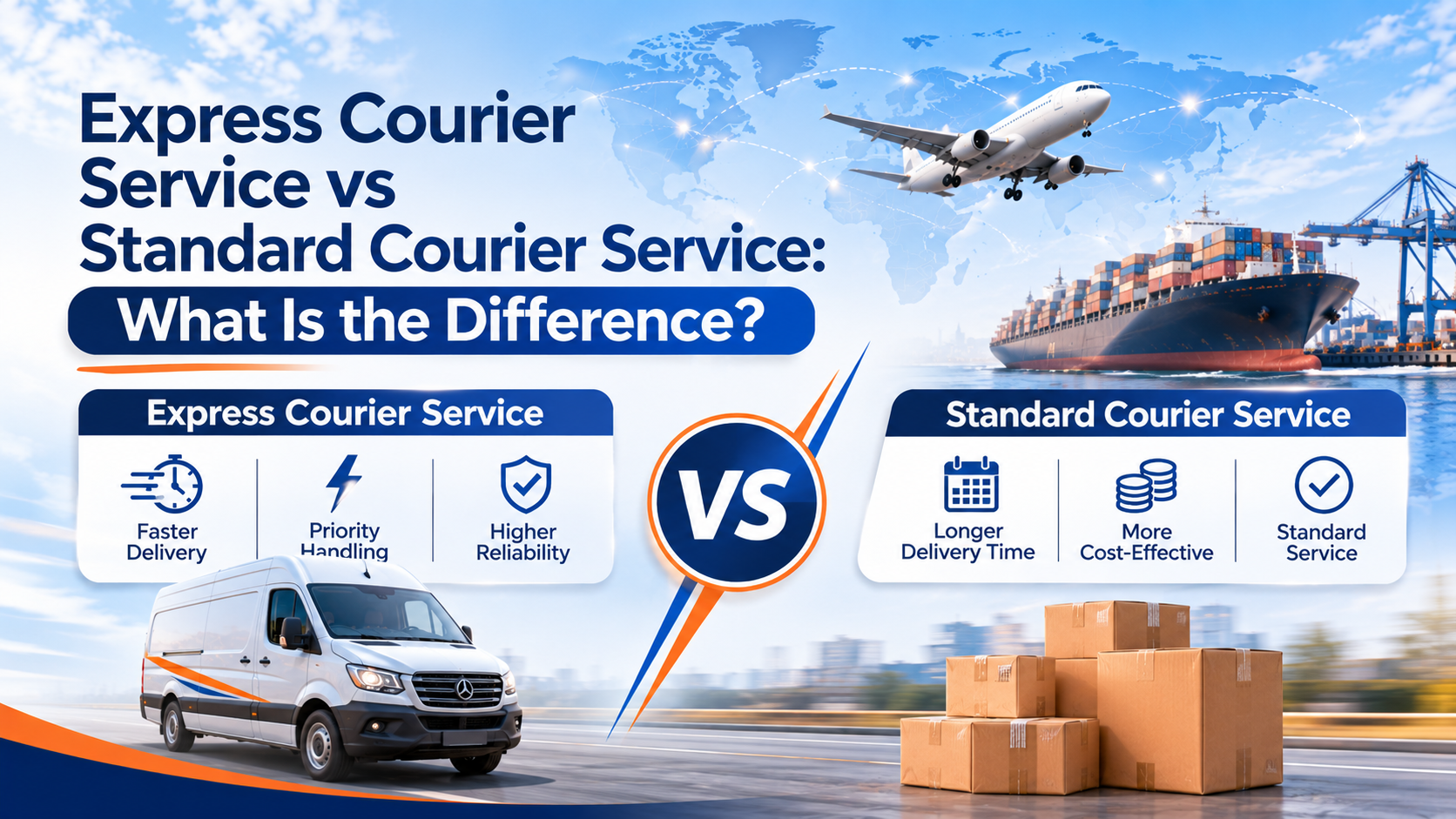
Express Courier Service vs Standard Courier Service: What Is the Difference?
Both express and standard courier services help businesses move parcels, but they are designed for different delivery requirements.
| Comparison Factor | Express Courier Service | Standard Courier Service |
|---|---|---|
| Delivery Speed | Usually faster | Generally takes longer |
| Cost | Often higher | Usually more economical |
| Best For | Urgent and time-sensitive shipments | Non-urgent deliveries |
| Delivery Priority | May receive priority handling | Follows standard service schedules |
| Business Use | Urgent orders, documents and replacement parts | Routine stock and regular parcels |
The best option depends on your business priorities. Express delivery is useful when time matters, while standard shipping may be more practical when cost savings are more important than speed.

Industry Trends Shaping Express Delivery Services
Business shipping requirements continue to evolve as customer expectations, technology and supply chain operations change.
Several developments are influencing how companies select courier services.
Greater Demand for Shipment Visibility
Businesses increasingly want to know where their shipments are and when they are expected to arrive.
Digital tracking and automated delivery notifications help improve communication between courier providers, businesses and recipients.
Growth of E-Commerce Deliveries
Online shopping has increased the importance of dependable parcel delivery.
Retailers need courier arrangements that can handle customer orders, returns and changing delivery volumes while maintaining a consistent customer experience.
More Focus on Delivery Flexibility
Businesses may need different shipping options depending on order urgency, destination and product type.
This creates demand for flexible arrangements rather than relying on one delivery method for every shipment.
Increasing Importance of Cross-Border Shipping
Businesses selling internationally need to consider transport costs, customs requirements, documentation and delivery timelines.
Courier and freight arrangements that provide clear information about these factors can help companies plan international shipments more effectively.
Technology-Driven Logistics Management
Digital booking systems, tracking platforms and automated notifications are helping businesses manage shipping information more efficiently.
These tools can reduce manual follow-ups and make it easier to monitor multiple consignments.

Expert Recommendations: How to Select the Right Courier Partner
Before making a final decision, businesses should evaluate their shipping requirements and compare providers against practical performance factors.
Use this checklist when assessing an express courier service:
- Confirm that the courier covers your regular destinations.
- Compare actual delivery commitments rather than advertised speed alone.
- Check shipment tracking and proof-of-delivery facilities.
- Request a clear breakdown of shipping charges.
- Understand how delays, lost parcels and damaged shipments are handled.
- Check international customs and documentation support.
- Confirm whether your shipment type is accepted.
- Review customer support and escalation procedures.
- Compare performance over time instead of relying on one successful delivery.
- Choose a service that matches your business volume and delivery needs.
A good courier partner should offer a suitable balance of speed, reliability, communication and cost.
The most expensive option is not automatically the best, just as the cheapest option is not always the most suitable.
Future Outlook: What Businesses Can Expect From Express Delivery
Express delivery is likely to remain important as businesses continue to serve customers across wider geographical areas.
Customers want clear delivery expectations, while businesses need better control over shipping costs and operational schedules.
As logistics technology develops, tracking visibility, digital communication and more flexible delivery arrangements are likely to become increasingly important.
For businesses, the priority should be choosing shipping partners that can adapt to changing requirements while maintaining dependable service.
Rather than focusing only on delivery speed, companies should look at the complete shipping experience, from collection and tracking to final delivery.
Conclusion
Choosing the right express courier service is an important decision for businesses that depend on timely deliveries. The right provider can help improve shipment visibility, support customer expectations and reduce the disruption caused by delayed consignments.
Before selecting a courier, compare delivery speed, reliability, pricing, destination coverage, tracking facilities, shipment handling and customer support. For international deliveries, also consider customs clearance and documentation requirements.
Most importantly, choose a service that matches your actual business needs rather than selecting an option based on price or speed alone.
At NN Freight Ltd, businesses can explore shipping and freight solutions based on their delivery requirements. Whether you are managing urgent consignments or planning international shipments, having the right logistics support can make your shipping process more organised and predictable.
Frequently Asked Questions
1. What is an express courier service?
An express courier service is a shipping option designed to deliver parcels, documents and other consignments faster than standard delivery services. Depending on the provider and destination, it may include same-day, next-day, overnight or international priority delivery.
2. How do I choose the best express courier service for my business?
Compare delivery speed, reliability, destination coverage, tracking facilities, pricing and customer support. If you ship internationally, also check customs handling and documentation requirements. The best service is the one that meets your delivery needs without creating unnecessary costs.
3. Is an express courier service faster than standard delivery?
Generally, yes. Express courier services are designed for faster or more time-specific deliveries, while standard services usually follow longer delivery schedules. Actual transit times depend on the provider, shipment details, collection time and destination.
4. What is the difference between a fast courier service and an express courier service?
The terms are often used similarly, but service commitments can vary between providers. Express courier services generally offer defined priority or faster delivery options. Businesses should check the actual transit time and conditions instead of relying only on the service name.
5. Are express delivery services suitable for international shipping?
Yes. Many courier providers offer international express delivery for documents and parcels. However, transit times depend on destination coverage, customs clearance, documentation and local delivery arrangements. Confirm these details before sending an international shipment.